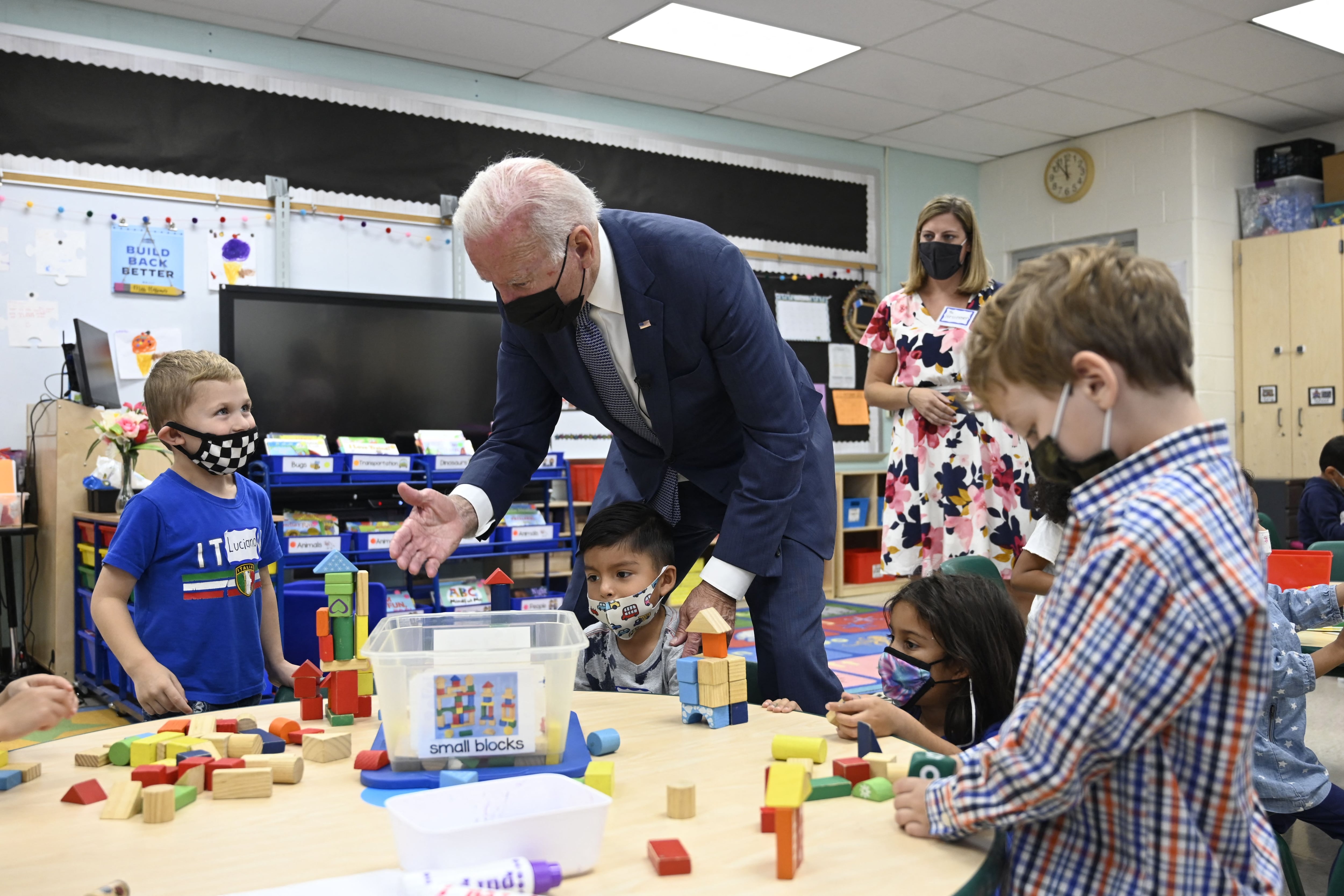
President Joe Biden has a message to Americans: Consider becoming a tutor or serving as a mentor at your local school.
“The American Rescue Plan gave schools money to hire teachers and help students make up for lost learning,” Biden said during the State of the Union address Tuesday. “I urge every parent to make sure your school does just that. They have the money. We can all play a part: sign up to be a tutor or a mentor.”
The President beseeching citizens to pitch in at schools is an unusual move, but reflects the tumult of the last few years, as the pandemic drove school staffing shortages and students fell behind academically. Children’s “lives and education have been turned upside down,” Biden said.
A number of states and school districts have been working to staff big new tutoring programs meant to help students catch up, paid for with federal COVID relief. At the start of this school year, Oklahoma was searching for 500 math tutors; Chicago was recruiting 850 math and reading tutors; and Dallas was looking for 1,800 tutors. Many planned to have recruits go through significant training, and a national labor shortage has contributed to hiring difficulties, making it unclear if many Americans will respond to Biden’s call or if schools will be equipped to take advantage of them.
There’s a solid evidence base to support expanding tutoring and mentoring efforts. Frequent, small-group tutoring has produced large learning gains, and mentoring in schools has been linked to better grades and an increased likelihood of attending college.
Schools have also struggled to stand up tutoring programs that rely on existing educators, many of whom are exhausted by pandemic-era teaching. In New York City, some schools had planned to use COVID relief money to pay teachers to tutor on Saturdays or after school, but haven’t been able to keep those programs fully staffed.
Still, a recent survey found that less than a third of district superintendents said they had a shortage of tutors. The most acute shortage areas were substitute teachers and bus drivers. In response, several states have recently loosened requirements for substitute teachers, while others are considering changing rules to encourage retirees to return to classrooms.