High schoolers: How important is this year’s election? Tell us.

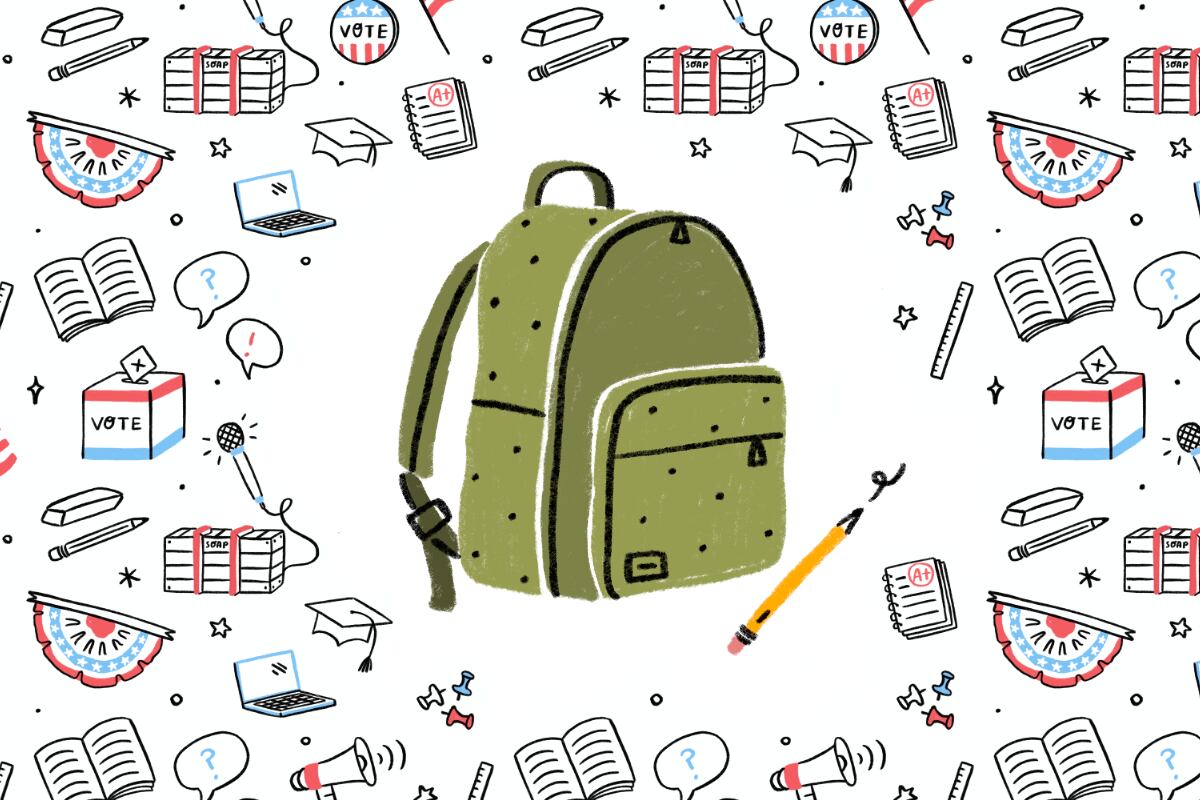
An illustration with small details showing books, computers, graduation caps and election symbols surround a large green backpack on a white background.
The 2024 U.S. presidential election will dominate conversations. Chalkbeat and The New York Times want to hear from high school students about how this moment feels inside your classrooms. (LeeAndra Cianci / The New York Times)

Dear high schoolers,

This year’s U.S. presidential election will dominate conversations worldwide. This fall, American citizens will once again cast their votes, and the two leading contenders are poised to be the same ones from four years ago. 2024 might feel eerily similar to the tumultuous 2020 presidential election and its aftermath.

Once again, inside your classrooms, history is being taught at the very moment it’s being made.

Since this could be the first election you’ll have a chance to vote in, we’re eager to know how important this moment feels in your classes and to you and your friends. Are you closely following the campaign? Or does it feel not that connected to your life?

The New York Times’ Headway team and Chalkbeat want to hear directly from you. Take a moment to complete our questionnaire below, and we’ll be in touch with you soon.

The Latest

After debate about when the first semester should end, the school board ultimately chose to adopt calendars in which the semester would end after winter break.

Members of the City Council have expressed concerns about the district’s sweeping facilities plan.

The network’s leaders have insisted two high schools they operate will remain open at least until the end of the school year. But CPS officials say they have run out of patience with ASPIRA’s failure to provide financial documents and a plan showing it can stay open.

Kamar Samuels’ proposals represent the school system’s first concrete policy response after a Manhattan mom’s racist comment drew widespread condemnation.

Superintendent Tony Watlington has said the plan will need $2.8 billion in funding. The people who control that money take issue with what he wants to do.

Vladimir Kogan argues school governance is built around adult incentives, not student learning. He lays out three fixes — from election timing to growth data.