How should Illinois spend its share of another $5.1 billion in federal stimulus funding for schools? Tell us.

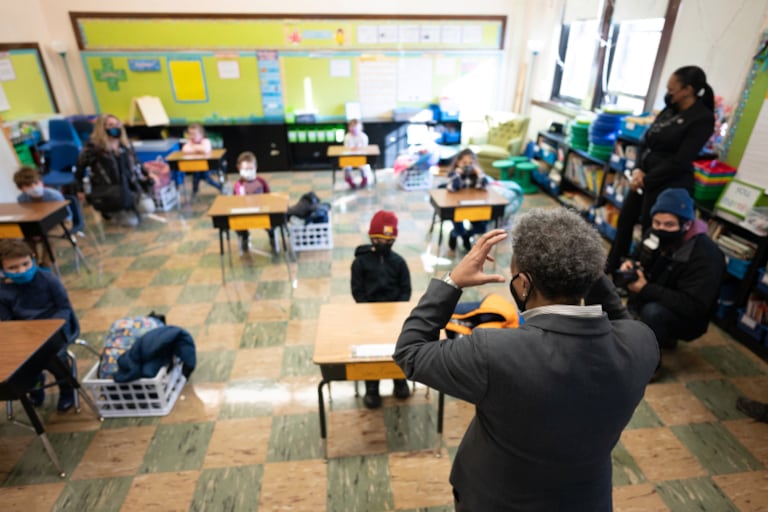
Mayor Lori Lightfoot gestures as public officials tour classrooms at Hawthorne Scholastic Academy on March 1. Chicago Public Schools expects to receive nearly $1.8 billion from the new round of COVID-19 stimulus funding. What advice would you give Lightfoot and school leaders on how to spend it? (Colin Boyle/Block Club Chicago)

Illinois is set to receive more than $5 billion in federal stimulus funding for schools, and most of that will go directly to districts. Chicago, the state’s largest district, will receive about $1.8 billion of that — money leaders have said will go toward mounting costs of reopening campuses and addressing learning disruptions from the pandemic.

Superintendents and school boards will have a lot of flexibility to determine where to direct the money, though the federal government has said they must use at least 20% to address learning gaps. 

How would you like to see your district spend the money? What priorities should superintendents and school boards keep in mind? Tell us in the survey below. 

If you are having trouble viewing this form on mobile, go here.

The Latest

One bill revives part of a proposal vetoed last year. The other is in response to the Evergreen High School shooting.

A new bill would allow some Tennessee private school teachers to get an emergency teaching waiver to teach at a public school but don’t have a bachelor’s degree.

One planning commissioner said he worried the school’s original industrial location could result in a child “ending up underneath a cement truck.”

The Department of Justice is investigating whether parents can take their kids out of classes with “gender ideology” lessons.

Four years after the city announced the 65th Street child care center in the Upper East Side’s 10065 ZIP code, Mamdani said Thursday it will open 132 seats for pre-K and 3-K in the fall.

The governor’s budget proposal increases the main funding for Illinois schools by $305 million. Still, that increase is less than what state education officials and advocates had called for.