Attendance on the first day of classes in Chicago Public Schools almost rebounded to pre-pandemic levels, according to numbers released by the district Friday.
The district said 93.4% of students showed up on the first day, an uptick from last year when 91% did and far more than the 84% who logged on for a virtual first day in fall 2020. The increase came even as students returned earlier than usual on Aug. 22, two weeks before Labor Day.
First-day attendance is typically higher than the district’s average daily attendance rate by about 2 percentage points.
Overall average daily attendance rates have hovered above 90% since 2003, but dipped below that in 2021 — a stark reminder of the challenges spurred by the coronavirus pandemic. Whether daily attendance this year rebounds is yet to be seen, but the first-day numbers could foreshadow improvement.
Daily attendance also varies by grade, with fourth graders attending school the most and 12th graders attending the least.
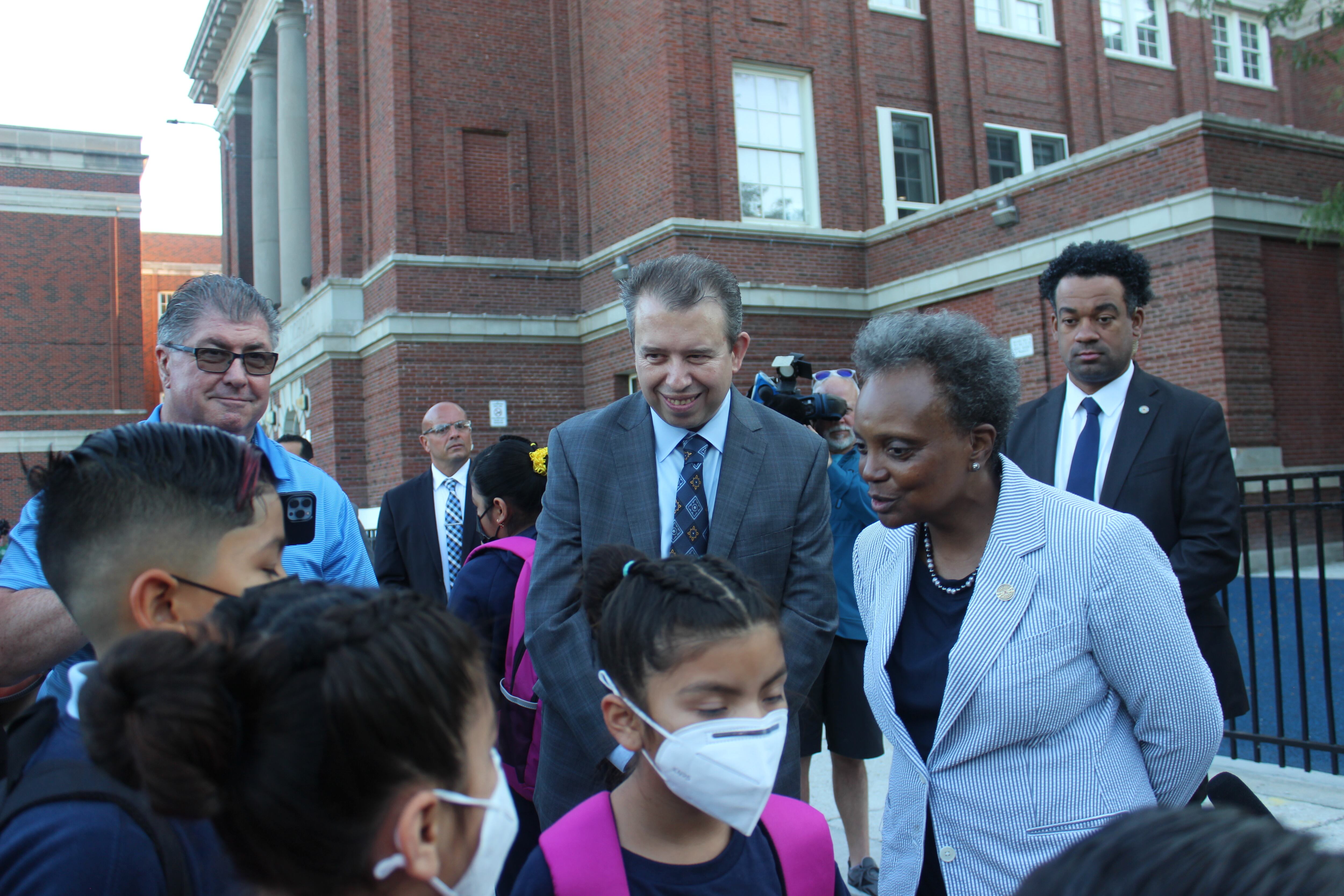
In a press release, the district credited the rebound in first-day attendance to summer programing such as academic recovery classes and grade-level transition camps. Schools chief Pedro Martinez said he was “thrilled to see a higher percentage of students” in the classroom when school started last week.
“I am grateful to our amazing CPS families for allowing us to work with more than 91,000 students over the summer and to all our faculty and staff who provided great learning experiences,” Martinez said. “Now we must continue to keep students in school where they can continue to learn, grow, and succeed with their classmates.”
The attendance rates reflect the proportion of students enrolled and in school on the first day. The district did not provide school-level attendance data for the first day, but average daily attendance data show rates also vary widely by school.
Chicago and other school districts have been working through challenges created by the coronavirus pandemic, including student disengagement and a steep drop in enrollment. CPS has been bolstering its efforts to re-engage students in the last few years.
Attendance is not only important for learning, but it’s also a factor used by the state to determine how much state funding a school district will get. However, legislation passed in 2021 means districts won’t be punished for attendance dips during the pandemic.
Chicago Public Schools will also take an official enrollment count on the 20th day of school – data that will likely not be available until late September or early October. But researchers are predicting another significant drop.
Thomas Wilburn contributed to this report.
Mauricio Peña is a reporter for Chalkbeat Chicago, covering K-12 schools. Contact Mauricio at mpena@chalkbeat.org.
Becky Vevea is the bureau chief for Chalkbeat Chicago. Contact Becky at bvevea@chalkbeat.org.