

 Opens in new window
Read in Spanish. Read in Chinese.
This story was reported and published in collaboration with WBEZ, the Chicago Sun-Times, and Block Club Chicago, a nonprofit newsroom covering Chicago’s diverse neighborhoods. Stay informed with Chalkbeat Chicago’s newsletter, WBEZ and the Sun-Times’ education newsletter, and Block Club Chicago’s newsletters.
The race in this North Side district pits a retired educator appointed to the current school board against two challengers who say board members have faltered on fiscal responsibility and setting ambitious goals for Chicago Public Schools.
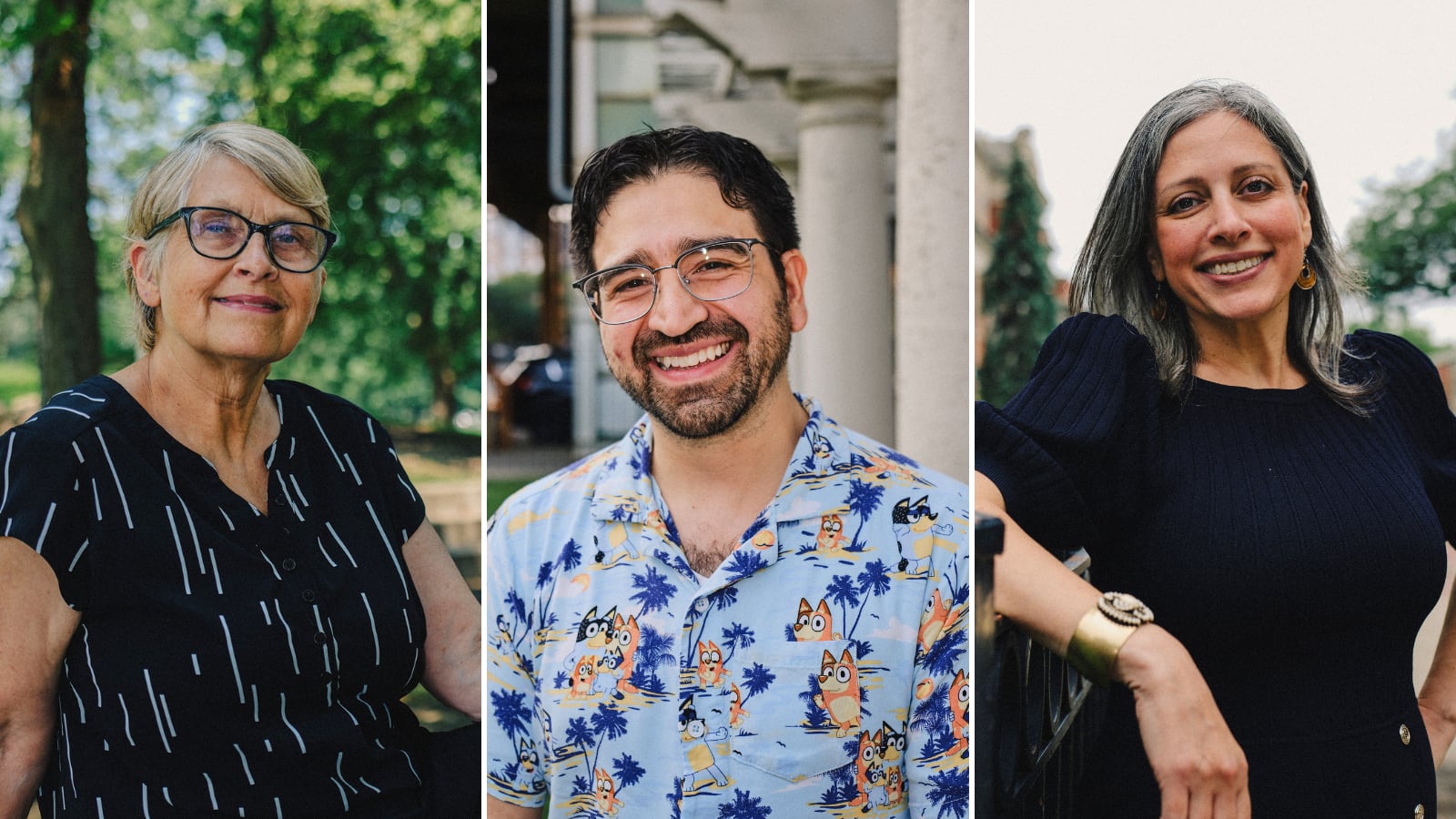
Karen Zaccor, a longtime Uptown teacher and advocate appointed to the school board by the mayor in 2024 after coming in second among six candidates, will face teacher recruitment and retention expert Ellen Sherratt and stem cell researcher Angel Alvarez.
The area along the north lakefront is home to 15 schools, less than almost any other school board district. They include high-performing neighborhood campuses, popular magnet schools, and a charter alternative high school. About 57% of students attend their neighborhood elementary schools, but that share is much lower at the high school level. The district’s campuses draw a diverse group of students: Of its 8,400 CPS students last school year, about 37% are Latino, almost 26% are white, 23% are Black, and nearly 8% are Asian.
In the 2024 school board race, what is now District 4a was part of a larger District 4. Board member Ellen Rosenfeld bested five opponents, the most of any race that year. Rosenfeld is running unopposed this year in neighboring district 4b.
Zaccor has voted consistently with a majority bloc of board members appointed by Mayor Brandon Johnson or elected with backing from the Chicago Teachers Union, Johnson’s former employer and close ally. Her priorities also echo those of the union, which has endorsed Zaccor. They include pushing for a billionaires tax or other new progressive state revenue to boost school funding and growing the Sustainable Community Schools program, a partnership between CPS and the CTU in which high-needs schools receive an additional $500,000 each year to partner with local nonprofits and expand services.
Her opponents Sherratt and Alvarez argue that the district must do more to address mounting deficits than lobby the state, including budgeting more thoughtfully and eliminating waste.
Sherratt has drawn endorsements and financial support from the Service Employees International Union Illinois State Council, which represents support staff and has split politically with the teachers union in recent years, and other groups that oppose the CTU. Those include the Common Ground Collective, an anti-CTU political action committee that is heavily funded by billionaire Michael Sacks and says it aims to engage voters around “effective progressive policies,” while two groups that advocate for school choice and charter schools support her campaign.
Sherratt said she would bring her expertise on teacher quality to the board and push for setting ambitious student achievement goals.
Alvarez, who leads a family advisory board for the district’s Office for Students with Disabilities, said he would champion more responsive special education services and protect families from higher property taxes.
Sherratt, who has long studied teacher recruitment and retention, says the school board needs more experts who understand national education trends. She said she would be an independent voice, unbeholden to the CTU or other special interests.
“I bring a breadth and depth of experience from around the country,” she said.
Sherratt said she has spent her career researching how schools can hire and retain excellent teachers and consulting with districts, states, and the federal government. She has worked on a national initiative to boost teacher pay and on Illinois efforts to address educator shortages. She now leads Common Cents Education, a teacher quality consulting firm she launched to work with districts on workforce issues. Sherratt’s daughter attends a private school — which she said was a “personal decision made for our family,” noting a track record of supporting public schools.
Sherratt said she wants the city and district to set a series of “moonshot goals” to reach by Chicago’s bicentennial in 2037, such as significantly improving math achievement. She would seek broad input on those goals, including from students, for whom she would host special after-school office hours, she said.
“We should be more ambitious and make the process and the goals something the city of Chicago can really be proud of,” Sherratt said.
She also said the board should advocate for more state funding but rejected what she described as heavy-handed tactics, such as passing the recent budget with “phantom money” that the board is pressuring the state to approve.
“I imagine to many in Springfield it feels like they are being bullied,” she said.
Read Sherratt’s full questionnaire.
Zaccor represents one of the city’s wealthier districts, home to some premier magnet campuses. Her focus as a board member, though, has been strengthening high-poverty neighborhood schools and addressing lingering inequities.
Zaccor said she doesn’t see a conflict. There are high-needs schools in her Uptown neighborhood, such as Uplift Community High School where she taught for years. She was part of a group of parents and advocates who founded Uplift in 2005. And Zaccor said families and students across the city have shared with her many of the same concerns, including the availability of after-school programs, amount of screen time in schools, and quality of cafeteria food.
“I’ll never believe that making a demand for a truly equitable system is the wrong thing to do,” she said.
She is a longtime advocate for an elected school board and former Local School Council member. Her daughter graduated from Whitney Young Magnet High School, a CPS selective enrollment campus. She said she prides herself on her board service so far, particularly her push for a more stringent process for renewing and monitoring charter schools.
Zaccor strongly supports the continued growth of the Sustainable Community Schools program, which has faced recent questions about implementation hurdles and thin evidence of improved student outcomes. The program is “a work in progress,” she said, but the district has learned lessons it can apply to newly added schools.
Her other priorities include continuing to push the state for more funding, embracing green schools, and improving cafeteria food. She opposes school closures, arguing that the district instead should spend more to revitalize schools with low enrollment.
“We need to invest first and see what kind of difference that can make,” she said.
Read Zaccor’s full questionnaire.
Alvarez is no stranger to how Chicago’s school board can impact people’s lives. Four years ago, his daughter, who is visually impaired, missed the entire first semester of third grade at Decatur Elementary School because she did not have transportation. He spent long hours pressing district officials in charge of yellow bus routes and speaking to the school board, which has the authority to approve bus vendor contracts. He even filed a state complaint and shared his family’s experience through national media outlets.
Alvarez now leads a family advisory board for the CPS Office for Students with Disabilities, helping troubleshoot families’ issues with transportation, special education staffing, and other services.
“In CPS, there is a huge disconnect between theory and practice — what’s on paper and what families actually experience,” Alvarez, a former Local School Council member, said. He added about navigating the transportation issue, “I have a doctorate, and it was a complicated process for me.”
Alvarez is a scientist and assistant professor at Northwestern University and is director of the Stem Cell Core. He also has advocated for gifted education and taught science to high school students through the Hispanic Math and Science Education Initiative.
If elected, he would push the city to screen all children for learning and other disabilities before they start school and connect families with existing resources.
Alvarez said he has spoken with school board members about issues ranging from school discipline to the district’s financial woes. Limiting CPS property tax increases is his top priority. He believes the district can do more with the dollars it now receives. Yes, it should continue to seek more revenue from the state, but Alvarez also said it should reduce waste and spend smarter, including by giving Local School Councils more sway over school budgets.
“It’s easy to say, ‘I’ll ask the state for more money,’” he said. “The state doesn’t have the money.”
Read Alvarez’ full questionnaire.
Mila Koumpilova is Chalkbeat Chicago’s senior reporter covering Chicago Public Schools. Contact Mila at mkoumpilova@chalkbeat.org.