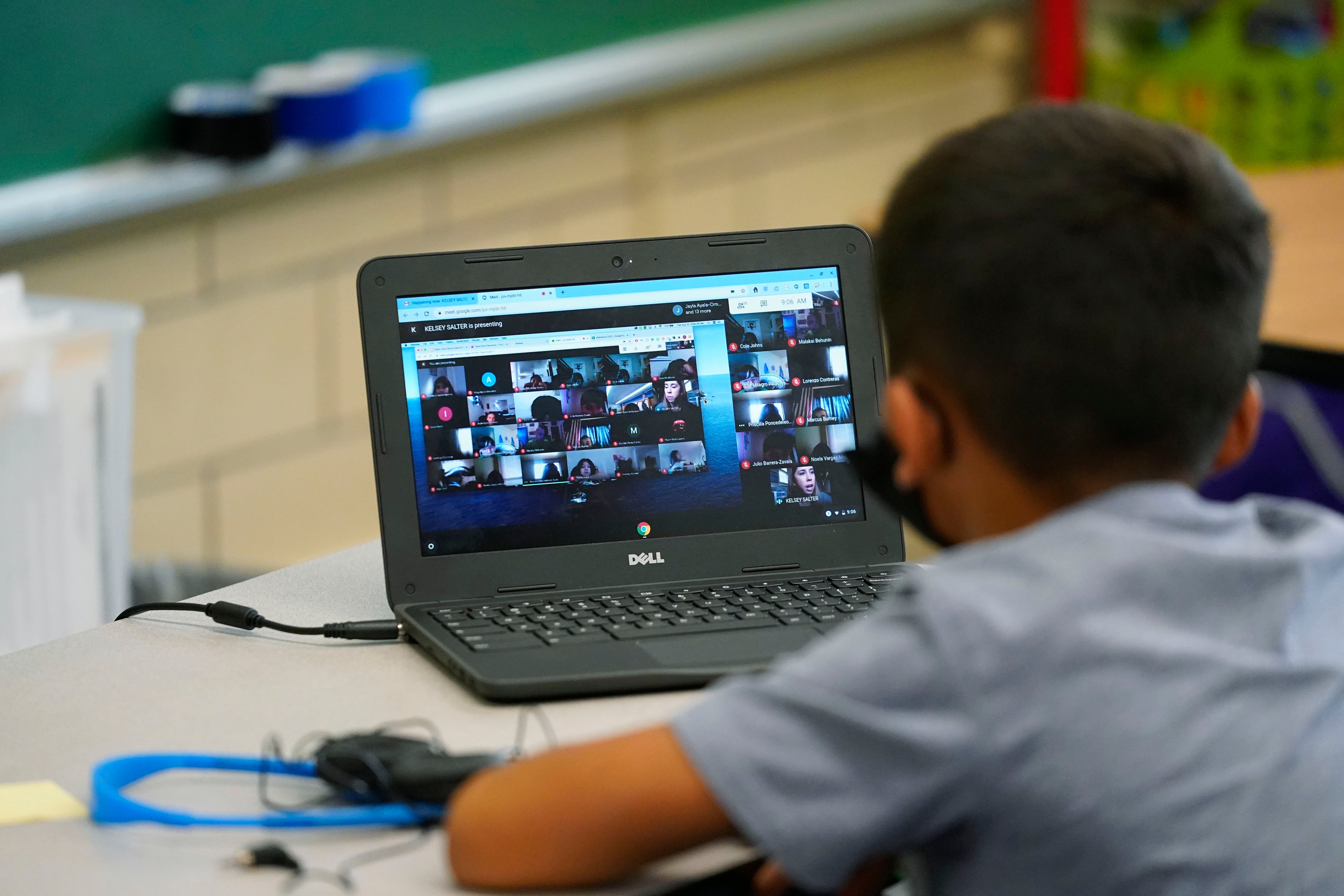
Denver Public Schools is shifting its remaining in-person students to remote learning after Thanksgiving, as COVID-19 cases continue to spike in the city.
Most Denver students are already learning online. But the district had kept classrooms open for preschool, kindergarten, first and second grade students, as well as some students with disabilities and students who are new to the United States.
In an email to families Wednesday, Superintendent Susana Cordova said the increasing spread of the coronavirus is causing “severe staffing shortages” in classrooms.
COVID cases among students and staff have skyrocketed from 13 per week in late September to more than 300 per week in early November. Whenever a student or teacher gets sick, that person’s contacts must quarantine at home for 14 days. If too many staff members are quarantined, schools don’t have enough adults to keep classrooms open.
“This deeply challenges our ability to operate our schools,” Cordova said. “And we’ve already had to close many schools because we lack the staff to run them.”
Online learning for kindergarten, first and second graders will begin Nov. 30. The district will provide preschool students with “supports for in-home instruction” but not remote classes. This is the same approach it took in the spring.
The district hopes to reopen classrooms to elementary school students in January, Cordova said, and to middle and high school students “as soon as we can do so safely.”
Denver Public Schools is Colorado’s largest school district, serving about 92,000 students. Many other districts have already switched to remote learning or plan to do so after Thanksgiving, including at least 20 of the state’s 30 largest districts.
“This shift to remote learning will allow our teachers and students to work on consistent, uninterrupted class routines and focus their energy on the important work of learning,” Cordova said.
“We all want our students back in our schools with our educators,” she said. “They’ve lost too much in-person learning time and support during the pandemic, and there has been too big of a burden placed on our families. Please help us reopen our schools for the second semester by following all health guidelines and staying home as much as possible.”