Colorado released school-level COVID vaccination data Friday in a new dashboard that shows wide variations around the state and within communities.
At Palisade High School in Mesa County, just 32% of students are fully vaccinated against COVID, compared with 76% at Legacy High School in the Adams 12 Five Star Schools district in suburban Denver and 82% at Boulder High School.
Within Denver, Bromwell Elementary, which serves a more affluent population in southeast Denver, has 65% of its students fully vaccinated, while at Barnum Elementary, which serves a more working class student body in west Denver, just 23% are. Many rural elementary schools have vaccination rates in the single digits.
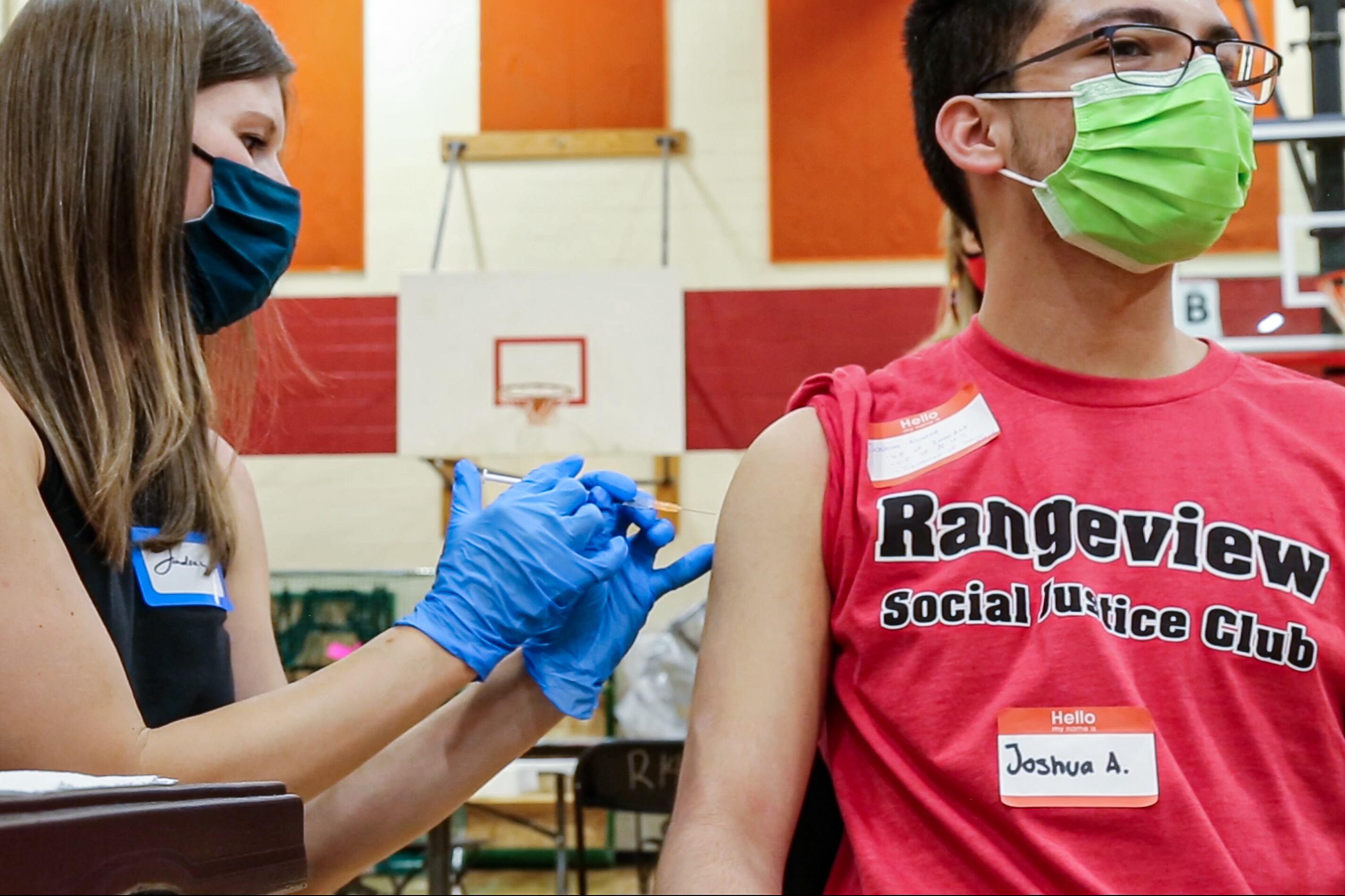
The differences reflect the way interest, access, and skepticism toward the COVID-19 vaccines have come down along political and socioeconomic lines. In general, older children are more likely to be vaccinated than younger ones, and parents of younger children have expressed more reservations about getting the shot. Medical experts say the vaccine offers protection for all age groups, and children should be vaccinated to reduce their risk of serious illness.
Statewide, 34% of children aged 5 to 11 and 62% of those ages 12 to 17 have received two doses of a COVID vaccine. Roughly 32% of older children have received the booster dose recommended for increased protection.
That’s above the national average but below where Colorado public health officials would like it to be. Schools are increasingly dependent on vaccinations to limit the spread of COVID in classrooms, as masks, quarantine, and other mitigation measures have been phased out.
COVID vaccinations are not required for school attendance in Colorado, and most schools haven’t collected vaccination information from families. The Colorado Department of Public Health and Environment compiled the database by cross-referencing state vaccination data with student data from the Colorado Department of Education. Officials said the analysis was done in a way that protects student privacy and the numbers are only reported in aggregate.
The dashboard, which shows the percentage of students who have received one, two, or three doses, will be updated weekly.