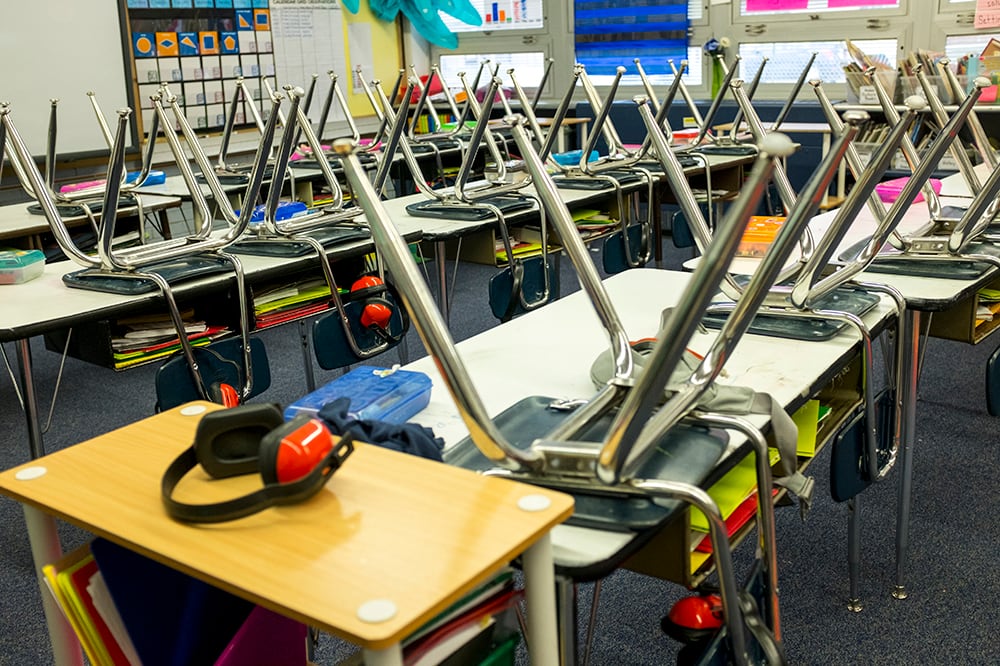
High schools across Michigan have been ordered to shut down in-person learning for three weeks as COVID-19 cases surge across the state, part of sweeping new orders officials say are necessary to slow the spread of the deadly virus.
Gov. Gretchen Whitmer announced the orders from the Michigan Department of Health and Human Services Sunday afternoon. The policy targets indoor residential gatherings and other group activities.
The Sunday announcement comes several days after the Detroit Public Schools Community District shut down in-person learning until January and as school districts across Michigan move classes to online learning because of the increase in COVID cases.
In addition to ordering high schools and colleges to move to remote learning, the new orders:
- Allow bars and restaurants to remain only open for outdoor dining, carryout and delivery.
- Prohibit gyms from holding group exercise classes but allow them to remain open for individual exercise.
- Closes casinos, movie theaters, and group exercises.
- Allows only professional and college sports to continue, without spectators. Other organized sports must stop.
The rules go into effect Wednesday.
“Right now, there are thousands of cases a day and hundreds of deaths a week in Michigan, and the number is growing,” Whitmer said. “If we don’t act now, thousands more will die, and our hospitals will continue to be overwhelmed. We can get through this together by listening to health experts once again and taking action right now to slow the spread of this deadly virus.”
The state says there have been fewer COVID outbreaks in elementary and middle schools.
“In-person K-8 schooling may continue if it can be done with strong mitigation, including mask requirements, based on discussion between local health and school officials,” state officials said in a statement.
Child care facilities can also remain open for working parents, the state said.
The head of the Michigan Association of School Boards said in a statement Sunday that the organization supports the new orders.
“Public schools have had processes in place since late summer to limit community spread, but we recognize the effect of not being able to adequately staff schools as employees are either diagnosed with the virus or need to quarantine due to contact,” Don Wotruba, executive director of the organization, said. “We hope that reducing the number of employees and students in our buildings for three weeks will positively contribute to lowering the numbers in our state while still allowing our most vulnerable student populations to receive the face-to-face instruction that best meets their learning needs.”
Michigan recorded 7,072 positive cases of the virus Sunday, for a total of 251,813 since March. Cases have been rapidly rising for weeks.