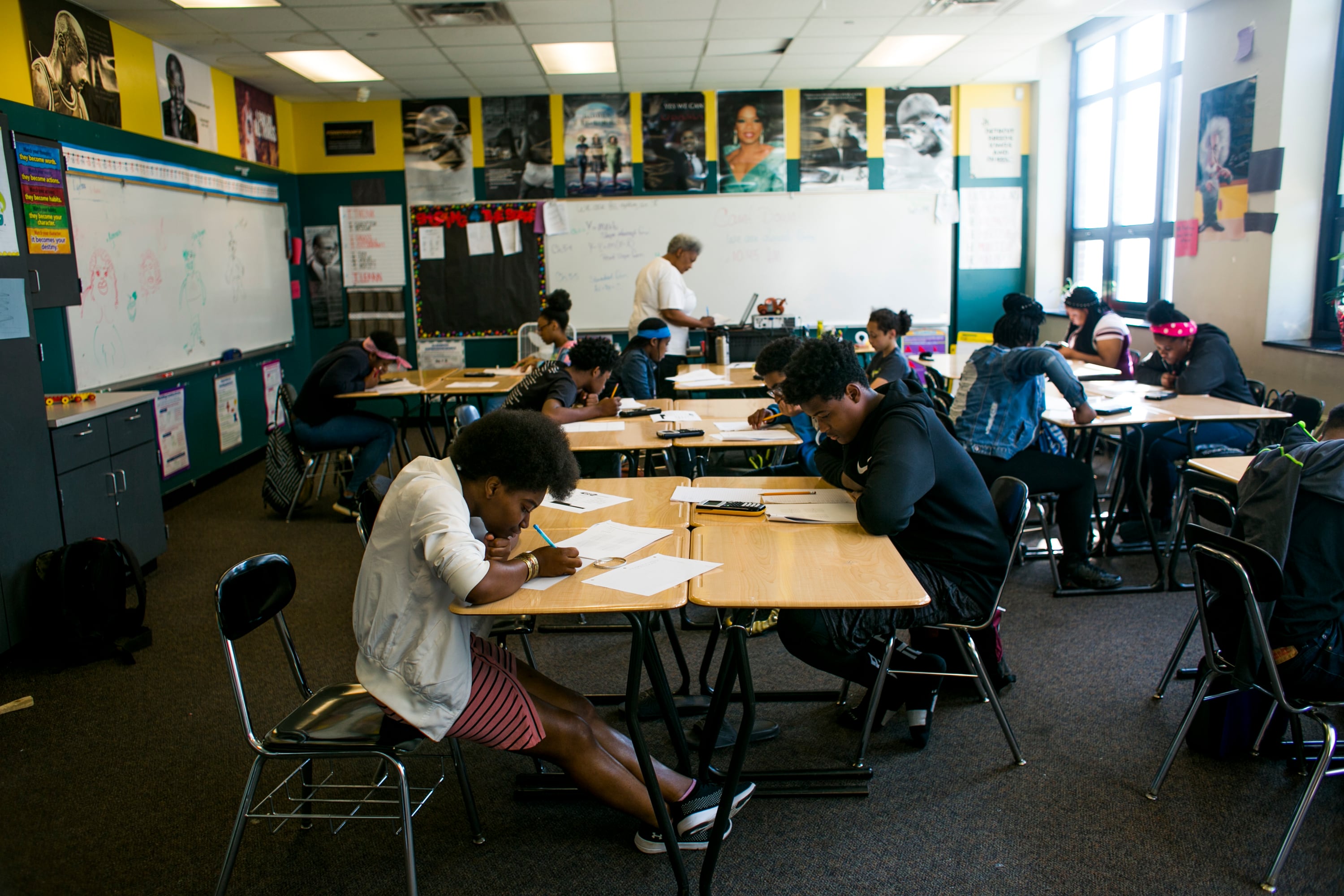
Vulnerable children should be protected from any cuts to school funding if Michigan students are to have any chance at rebounding from the effects of the coronavirus, say the authors of a new report from the Education Trust-Midwest.
“If we do a flat, across-the-board cut, what we end up with is a system where cuts are inequitable because schools aren’t funded at the same level and they don’t serve the same kids,” said Brian Gutman, director of external relations for the education and research organization, which is based in Royal Oak.
The report, “A Marshall Plan: Reimagining Michigan Public Education,” was released Tuesday morning and outlines six recommendations for recovering from the pandemic and addressing opportunity and achievement gaps. (To read the full report, scroll down below).
There’s a lot at stake. Many Michigan students will enter the upcoming school year with learning losses due to the shutdown of school buildings and the shift to remote learning. Those losses are expected to hit particularly hard for students who were already behind academically. A successful return to the classroom will be important in Michigan, where leaders have been pushing to improve the state’s lackluster performance on a national exam.
But Michigan schools are facing historic cuts in funding as a result of the pandemic. The state shutdown of the economy caused steep drops in state revenue. Some projections have school leaders bracing for a potential cut in funding of nearly $700 per pupil.
While Michigan schools have benefited from $350 million in funding through the federal coronavirus relief bill Congress passed in March, advocates say that won’t be enough and are urging Congress to allocate more funding.
Gutman said he hopes Congress comes through and Michigan can avoid cuts altogether. But if there are cuts, he said Michigan officials should first ensure there will be no cuts to the money the state has traditionally set aside for vulnerable children (including “at-risk” funding and money for special education and English language learners).
In addition, he said, any cuts to the separate per-pupil allocation should not be made across the board, but done so that funding for vulnerable children is protected or cut less.
There have been calls recently for Michigan to adopt a funding system that provides more funding for the most vulnerable children, most notably as part of a 2018 report from the School Finance Research Collaborative, a group of education, policy, and business leaders pushing for a major change in school funding.
“The COVID-19 pandemic has shined a spotlight on huge inequities and the lack of fairness in Michigan’s school funding approach,” said Robert McCann, the project director for the collaborative. “Lawmakers grappling with the possibility of school cuts amid this public health crisis need to heed the recommendations of the ... report during the pandemic and beyond so our kids don’t continue falling behind.”
Here are the other five recommendations in the report:
- State leaders should ensure there is oversight and transparency of how schools are spending the federal coronavirus relief funds. Leaders should also ensure schools follow all guidelines for reporting public information.
- State and district leaders must plan for extended learning opportunities for students, including summer school offered by all districts for all students for at least two to three summers.
- For distance learning, schools must do more than ensure that students have devices and internet access. They also must ensure teachers are properly trained and supported, and families receive the right information to support their children learning at home.
- Schools must ensure that students learning remotely receive socioemotional support, college and career counseling support, and access to other non-academic resources.
- Schools must provide support to high school students transitioning to college. And the state should pick up the cost of college remedial classes for students who were in high school during the pandemic.