Sign up for Chalkbeat New York’s free daily newsletter to get essential news about NYC’s public schools delivered to your inbox.
In response to a blizzard of executive orders from President Donald Trump, the Public Broadcasting Service recently erased a series of videos made in partnership with New York City Public Schools focused on LGBTQ history.
This week, the city’s Education Department found a new home for them: its own website.
The short films draw on material from the city’s LGBTQ-focused curriculum, part of a series called “Hidden Voices” that seeks to elevate a broad range of underrepresented groups students learn about in their social studies classrooms.
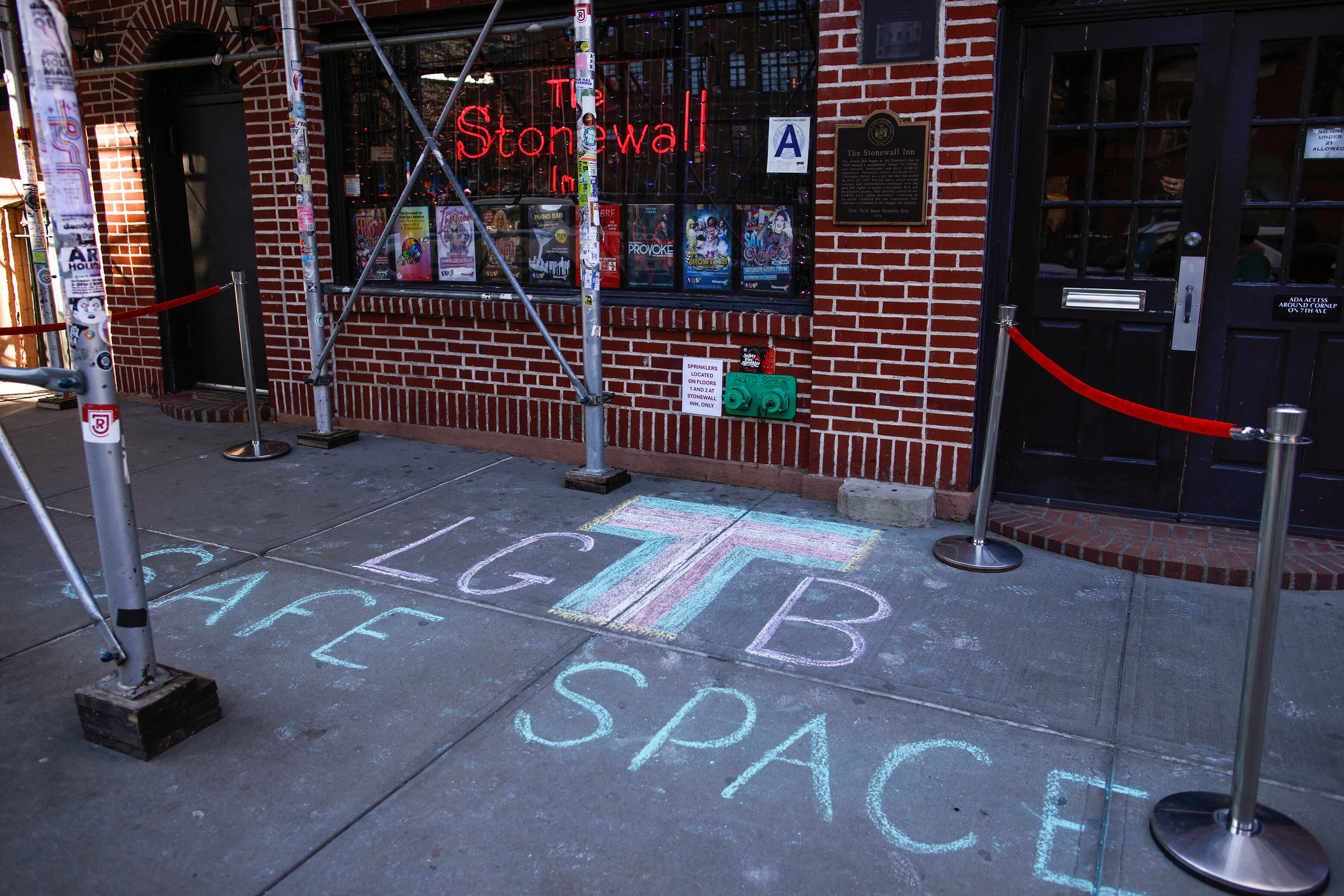
The videos profile prominent LGBTQ people such as the feminist thinker Audre Lorde and civil rights leader Bayard Rustin. They also survey key historical moments, including the mass dismissal of queer government employees during the Lavender Scare of the 1940s-’60s and the 1969 Stonewall uprising in Greenwich Village, widely considered a catalyst of the modern LGBTQ rights movement.
The city partnered with WNET, the local PBS affiliate, to produce the videos, and the broadcaster distributed them on its website. City Council allocated nearly $600,000 in discretionary funding to WNET in recent years to create LGBTQ curriculum resources, city records show.
The public broadcasting network’s decision to delete the videos, first reported by the news site Hell Gate, represented one of the first examples of Trump’s executive orders resulting in restricted access to curriculum materials developed for New York City teachers. Historians who helped create the LGBTQ curriculum and accompanying videos said they were glad the Education Department republished them, but worried the materials may now be less accessible.
“The fact that it’ll continue to exist on the internet is great,” said Daniel Hurewitz, a historian who served as a lead author of the LGBTQ Hidden Voices curriculum and wrote scripts for some of the videos. “At the same time, I’m confident that PBS as a website has a bigger reach.”
Hurewitz began to suspect something was amiss shortly after Trump’s inauguration, when he noticed one of the videos he helped create had vanished from the PBS website.
The film, which won a New York Emmy Award, profiles Albert Cashier, an Irish immigrant who was assigned female at birth but lived as a man and fought in the Civil War. He was later outed and accused of fraudulently collecting a pension, but his fellow soldiers came to his defense.
Representatives of PBS and WNET, the city’s local PBS station that helped produce the videos, did not respond to questions about why they pulled the films. A PBS spokesperson confirmed to Hell Gate that the videos were scrubbed in response to Trump’s executive orders but did not specify which one.
One order threatens to withhold federal funding for schools that teach “gender ideology” or “discriminatory equity ideology,” while another attempts to root out diversity, equity, and inclusion programs across the federal government. In response, PBS recently closed its DEI office.
Stacie Brensilver Berman, a New York University professor who studies how schools teach LGBTQ history and helped create the Hidden Voices curriculum guides, said one silver lining is the videos may become more clearly associated with the Education Department.
“Having them on the DOE website, even though it’s happening for all the wrong reasons, demonstrates the connection between the videos and the Hidden Voices written materials, which I think can be important in terms of teachers thinking about how to use them,” she said. “It might not be the statement they’re trying to make at all, but it does in my mind signal to LGBTQ students and teachers that the DOE is supporting them.”
A city Education Department spokesperson did not comment on the decision to post the videos. Some parts of the department’s website still link to a PBS site where the videos are not available.
Brensilver Berman hopes that PBS will return the materials to its website as well, though she noted that the organization may continue to be in a difficult position because of its reliance on public dollars. About 16% of PBS funding comes from the federal government.
For his part, Hurewitz worries that broader attacks on teaching about LGBTQ people and their history will have tangible consequences for students across the country.
“We know for sure it makes life better for queer kids if there’s queer representation in the curriculum,” Hurewitz said.
He added: “When people become invisible then it’s very easy to demonize them and criminalize them.”
Alex Zimmerman is a reporter for Chalkbeat New York, covering NYC public schools. Contact Alex at azimmerman@chalkbeat.org.