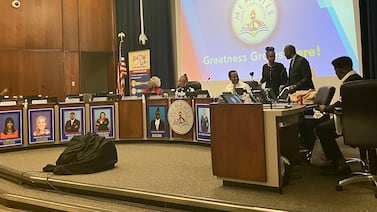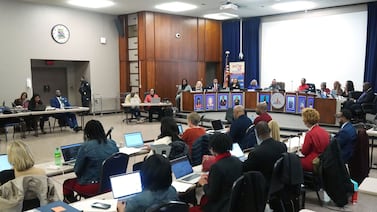
The Philadelphia Board of Education Monday is asking the next mayor to commit to a big increase in the school district’s annual funding, and to provide additional help in upgrading and repairing school facilities.
In an open letter released Monday, the board also asks for the city to devote more of its resources to addressing gun violence and helping the district to recruit and retain staff.
The letter is unusual in that the board members, who are appointed by the mayor, are publicly addressing political candidates to air their concerns about the district budget and other matters so close to an election. Generally, they make their budget case during a city council hearing in May.
The new mayor will have the ability to remake the nine-member board from scratch after taking office. City officials and others recently publicly accused Superintendent Tony Watlington of not being transparent about problems with school building safety, and threatened to withhold district funding.
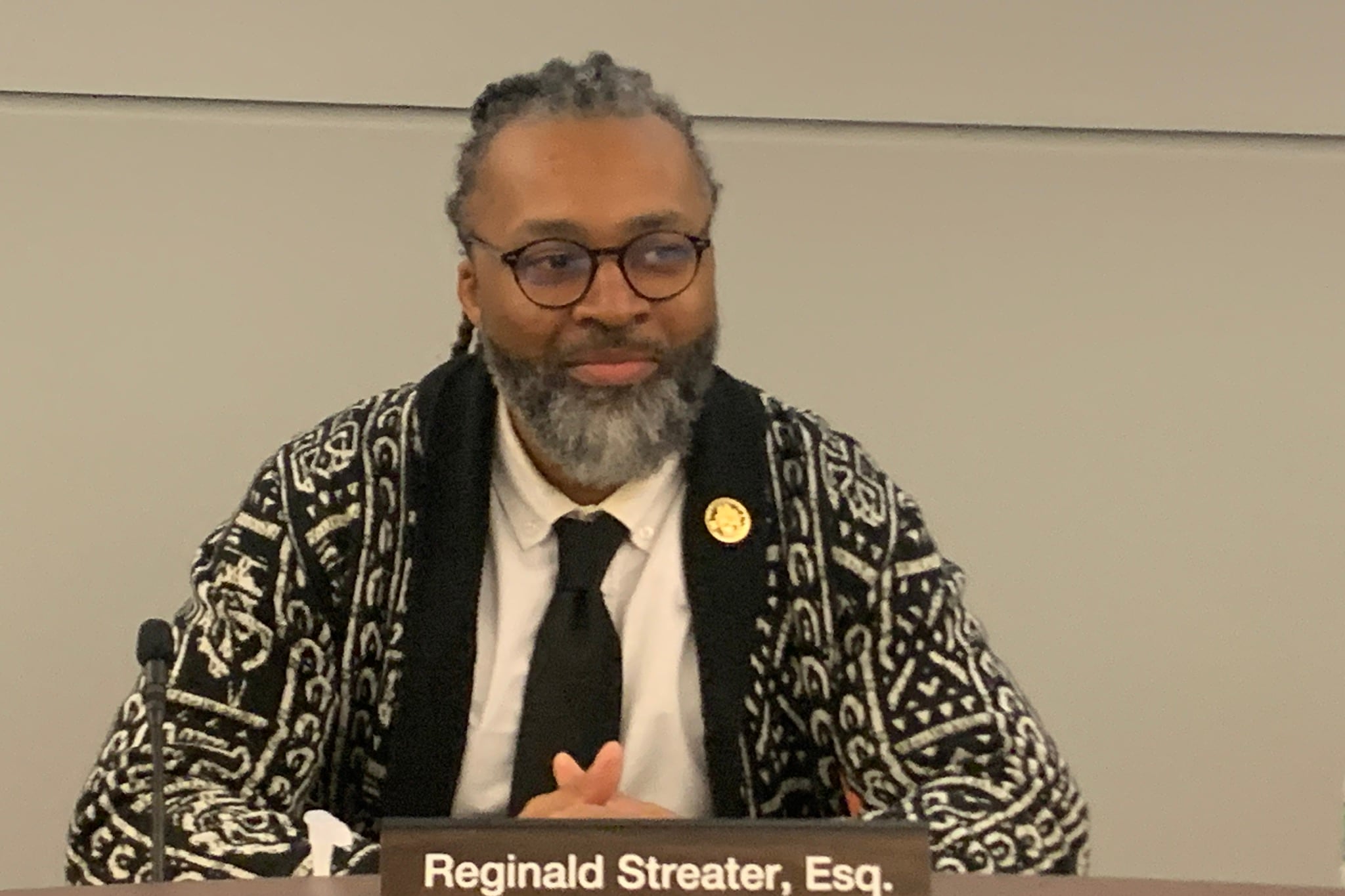
Philadelphia is “the only school district in the Commonwealth of Pennsylvania that cannot raise its own taxes, and the district is completely dependent on our local and state elected officials to provide the resources necessary to ensure that every student in the city has access to a quality public education,” said the letter, which was signed by board President Reginald Streater.
In the letter, Streater said the board wants the city’s future leaders to commit to increasing the district’s annual local funding by $318 million within the next four years. Streater said this increase would help the district meet an estimate from the Public Interest Law Center and the Education Law Center that it needs to increase total spending by more than $1.1 billion annually “to meet the educational needs of our learners.”
The city contributes about $1.7 billion to the district’s roughly $4 billion current operating budget. Most of the city’s contribution comes from property and other taxes earmarked for the district, and some is through a special grant which this fiscal year amounts to nearly $270 million.
Philadelphia school officials used the $1.1 billion figure when testifying for the plaintiffs in a historic lawsuit challenging the state’s current funding system, which results in wide spending disparities among districts. Last month, Commonwealth Court Judge Renée Cohn Jubelirer ruled the system unconstitutional and ordered an overhaul.
There are just under 200,000 students in Philadelphia’s 329 district-run, charter, and alternative schools.
“We are calling on city officials to balance the needs of our students with the needs of residents,” Streater said in the letter.
The party primaries in this year’s mayoral and city council races take place May 16.
The board’s letter comes shortly after the district was forced to close two high schools — Building 21 and Simon Gratz — within the past month due to the discovery of flaking asbestos.
While the letter doesn’t include a specific ask for facilities help, Streater cited a 2017 study estimating that the district has $4.5 billion in deferred maintenance costs and that “85 of our buildings should be considered for renovation, and 21 buildings should be considered for closure and replacement.”
On gun violence and student safety, Streater asked the city to increase safe corridors around schools, beef up libraries and recreation centers, enforce gun laws (especially as they relate to firearms possession by minors), and expand mental health services.
To recruit and retain more teachers, Streated suggested creating street parking around schools for staff, underwriting SEPTA passes for public transit commuters, and measures including loan forgiveness, housing vouchers, and other incentives for city residents who work in schools.
Two mayoral forums on education are scheduled for this week, one at the Free Library Tuesday evening, and another sponsored by the Commonwealth Association of School Administrators on Wednesday.
Dale Mezzacappa is a senior writer for Chalkbeat Philadelphia, where she covers K-12 schools and early childhood education in Philadelphia. Contact Dale at dmezzacappa@chalkbeat.org.