Sign up for Chalkbeat Philadelphia’s free newsletter to keep up with the city’s public school system.
To mark America’s bicentennial in 1976, the names of 816 children were sealed in a time capsule in Philadelphia.
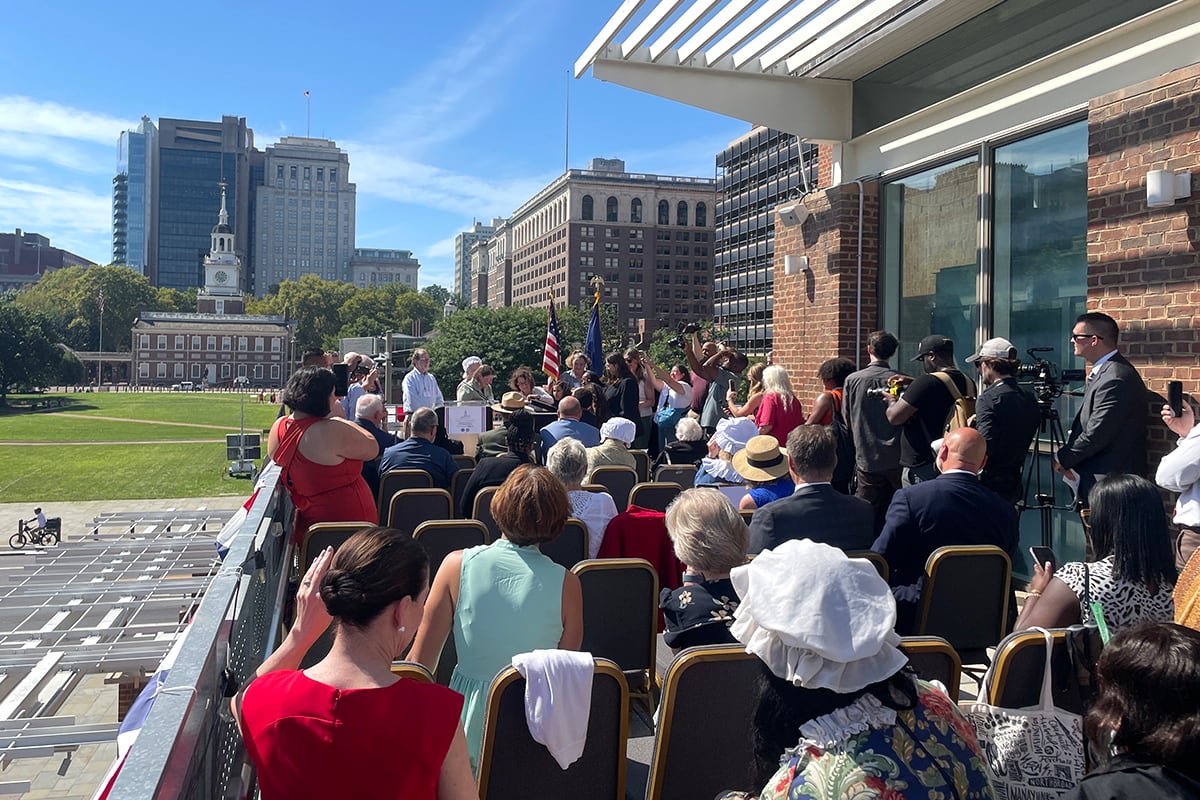
On Wednesday, at the visitor center for the city’s storied Independence Hall, a new crop of elementary school students opened that capsule.
In addition to the names, a binder in the capsule was full of newspaper clippings and letters from 50 years ago, including one from then-Mayor Frank Rizzo.
“There was so much history,” said Vera, 9, a fourth grader at General George A. McCall School.
All summer, Philadelphia has been immersed in celebrating the country’s 250th year and highlighting the city’s history as the birthplace of the nation. In 1776, America’s founders signed the Declaration of Independence on the site of Independence Hall, just a few blocks from McCall. Amid the festivities, school leaders have put a renewed focus on civics instruction. Officials hope that America’s 250th will also provide an unmatched opportunity to connect young people with civics and help them understand how democracy works.
The time-capsule reveal kicked off a day of civic learning organized by the Pennsylvania Commission for the United States Semiquincentennial, which was created by the state legislature. Students sat down with members of Pennsylvania’s appellate courts, met with elected leaders, and planned to watch the House conduct a legislative session inside the historic Congress Hall Wednesday evening.
The event took place after the city hosted several training sessions for teachers across the country related to the semiquincentennial celebration, along with dozens of other educational events for families and visitors.
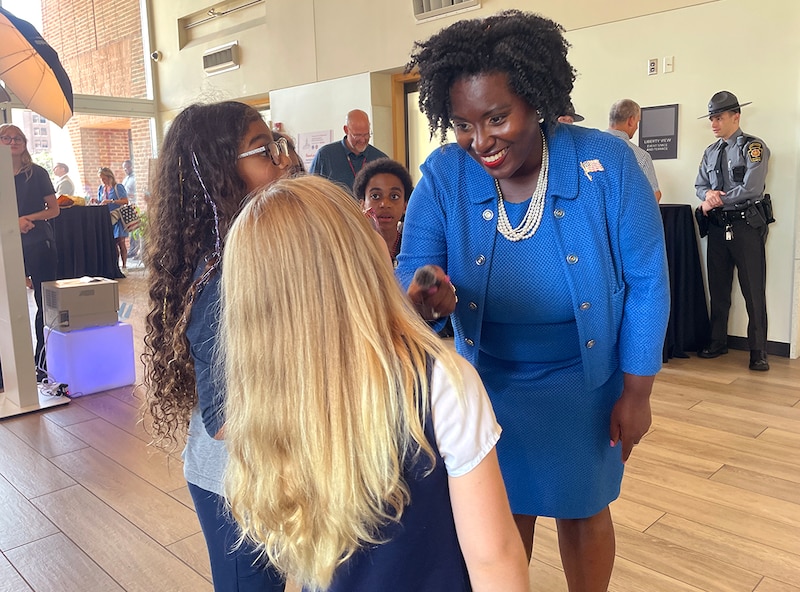
“You have a place in creating our next chapter of history,” Speaker of the Pennsylvania House of Representatives Joanna McClinton told the group of roughly 200 students from across the state. “There will be one of you leading the Pennsylvania House, one of you leading our state court systems, one of you in City Hall.”
Students get a view into lawmaking
Several students at the event said they weren’t sure if they were interested in running for office one day. But they looked forward to asking elected officials some questions about their roles and how they make decisions for the state.
Many students said they usually got their news from TikTok and Instagram, and didn’t feel like they or their peers had a deep understanding of civic issues. They said they appreciated the opportunity to learn more from the people in charge of making laws. For most, it would be their first time watching a legislative session.
Nyla Brown, 17, a senior at John Bartram High School in Southwest Philadelphia, said her school nominated her to attend the day’s events. She liked that the time capsule gave her a glimpse into what people were thinking fifty years ago, and enjoyed learning how elected leaders try to improve things for Pennsylvanians.
“I think it’s cool to understand how those things are solved, and how (elected officials) even get here,” she said.
But the event also made Brown notice the inequities and lack of resources the city and state still struggle with, she said. The majority of students she met at the civic learning day were from suburban districts. Kids at those schools seemed to get more access to field trips like this one, she said. She hadn’t met anyone else from her neighborhood.
Brown watched as officials put new letters in the time capsule for Philadelphians to open fifty years from now.
Chief Deputy Mayor Vanessa Garrett Harley read a letter from Mayor Cherelle Parker to the future mayor: “My hope is that you have inherited a Philadelphia where opportunity is never determined by ZIP code.”
To Brown, it was clear that’s not the case yet. “I live in a low-income ZIP code, and there aren’t really a lot of opportunities for students,” she said.
In 50 years, she hopes the people in charge will ensure that changes.
Rebecca Redelmeier is a reporter at Chalkbeat Philadelphia. She writes about public schools, early childhood education, and issues that affect students, families, and educators across Philadelphia. Contact Rebecca at rredelmeier@chalkbeat.org.