Did you know search engines like Google are changing the way you see news? Keep Chalkbeat’s valuable education coverage at the top of your feeds by clicking here and checking the box next to our name.
The days of school-by-school cellphone policies will soon be over in Philadelphia.
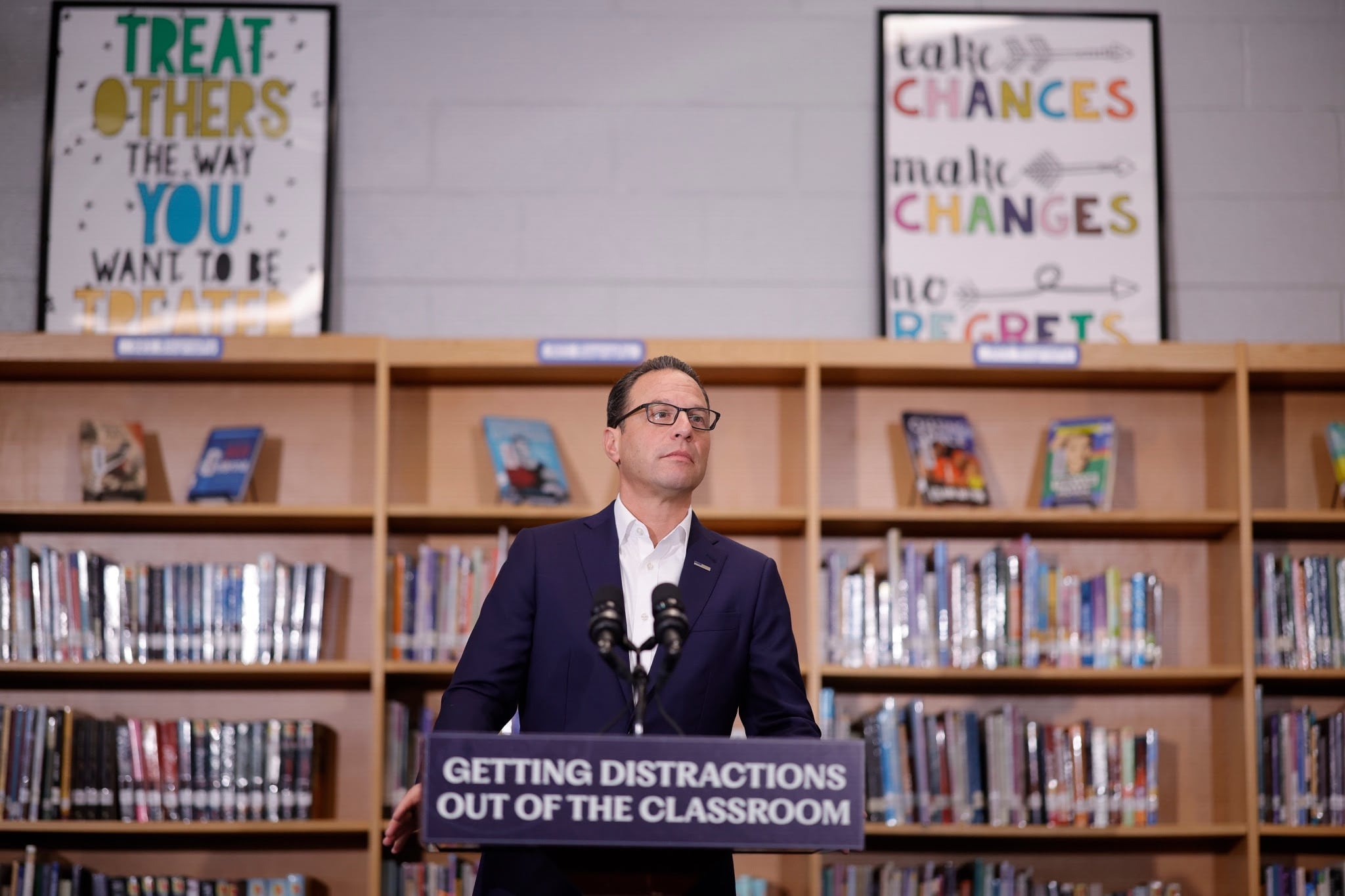
Gov. Josh Shapiro signed legislation Monday requiring all Pennsylvania schools to adopt “bell-to-bell” policies to prohibit student cellphone use during the school day by the start of 2027-28 school year.
Pennsylvania joins New York, New Jersey, Indiana and dozens of other states with similar bans in an effort to improve students’ focus and social connections.
“I’ve heard from parents and teachers who tell me about how our kids are too easily caught up by addictive algorithms,” Shapiro said at the bill signing at Lenape Middle School in Doylestown Monday.
The new policy would be a stricter mandate than what’s in place for many Philly schools now. Some Philly principals adopted their own versions of the ban even without the mandate, but others allowed students to use phones at lunch and for some class assignments. The new state law will end that flexibility.
Superintendent Tony Watlington has previously said he believes school cellphone policies are “best made at the school level.” But the district will now “work with principals, educators, students, and families to inform the development of a districtwide policy,” according to a statement from the Board of Education released last week after lawmakers passed the bill.
Under the new law, students will be prohibited from using cellphones at all public and private schools, with a few exceptions for students with disabilities, medical needs, and English learners. It also allows teachers to give permission for students to use a cellphone for educational purposes “provided that a school-issued device is insufficient or unavailable.”
Aaron Chapin, president of the Pennsylvania State Education Association teachers union, said in a statement on Monday that he is “confident that this change to the school day will have a positive impact on student behavior, academic performance, and mental health.”
Pennsylvania prohibits cellphone use during school lunch, recess
The new law will apply during the entirety of the school day, including lunch, recess, homeroom, and passing periods. It covers all internet-connected portable devices students can use to send and receive messages and play videos and games, except for those that are school-issued and approved.
The law requires each school to provide written notification to parents about how to contact students during the school day, and how to sign up for emergency notifications.
Notably, the bill doesn’t provide additional funding to help schools implement the ban. In 2024 the state budget included some money for districts to buy lockable phone pouches but some districts opted not to take it, according to the Philadelphia Inquirer.
Philadelphia principals previously said they spent money from their schools’ budgets to purchase things like lockable phone pouches and cabinets.
The law leaves the specifics of enforcing the new policy up to districts.
Rebecca Redelmeier is a reporter at Chalkbeat Philadelphia. She writes about public schools, early childhood education, and issues that affect students, families, and educators across Philadelphia. Contact Rebecca at rredelmeier@chalkbeat.org.
Carly Sitrin is the bureau chief for Chalkbeat Philadelphia. Contact Carly at csitrin@chalkbeat.org.