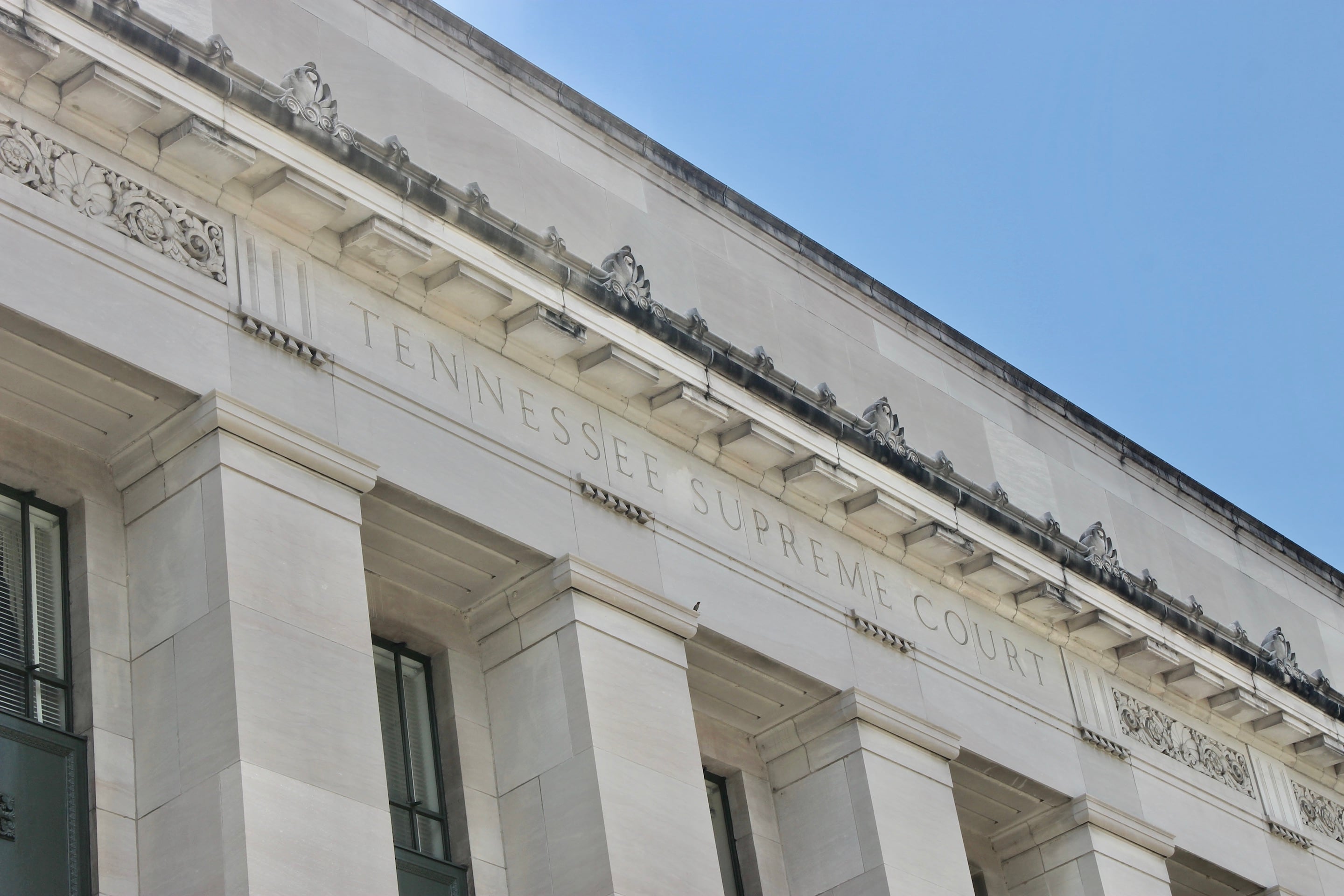
State officials asked the Tennessee Supreme Court Tuesday to restore a school voucher law overturned this spring by a lower court.
Attorney General Herbert Slatery III filed the state’s application to appeal to the state’s highest court just days before the court’s deadline for continuing the case.
The 32-page request comes after a series of judicial rulings blocked Gov. Bill Lee’s controversial education savings account program from starting this fall.
The governor has vowed to continue fighting for the 2019 law that would provide taxpayer money to eligible families in Memphis and Nashville to pay for private school tuition.
Lee says the goal is to give parents more education choices for their children. Critics say the program would transfer students and funding from public to private schools and saddle Tennessee’s two largest cities with an unfair financial burden.
But the merits of school choice aren’t at the heart of this case.
Metro Nashville and Shelby County challenged the law because it applies only to their communities without giving their local governments or voters a say. Their governing bodies were on record opposing the governor’s proposal when it squeaked through the legislature with the support of GOP lawmakers who had received assurances that their districts would not be affected.
Davidson County Chancellor Anne C. Martin agreed with the plaintiffs in May and ordered the state to halt the program before it launched. In September, a three-judge panel of the Tennessee Court of Appeals unanimously upheld Martin’s ruling, which was based on so-called “home rule.” The Tennessee Constitution prohibits the legislature from singling out individual counties unless approved by two-thirds of the members of those counties’ legislative bodies, or a majority of voters.
In its filing on Tuesday, the state argues that the law applies to two communities because only students in Shelby County Schools and Metropolitan Nashville Public Schools meet the eligibility requirements. If the program proves successful, the intent is to expand elsewhere in the state, the document says.
The program was “designed to initiate the ESA concept on a trial basis on a small scale in school districts that clearly have a track record of failing to provide tens of thousands of students with a quality education, and they are deserving of special attention from the pilot program,” the application says.
The latest appeal marks the second time the state has taken the matter to the Tennessee Supreme Court. In June, the high court declined to wade into the legal battle as the state sought to proceed with the voucher program pending the outcome of its petition to the state appeals court.
Depending on what the high court rules, the governor said recently that he hopes to include funding for the program when his administration unveils a 2021-22 state budget proposal in February.
“We’re hopeful that the ESA program will move forward as it was passed in the legislature, and there will be funding set aside for that program should it be approved in the courts,” he told reporters earlier this month.
Below is the state’s application to appeal.