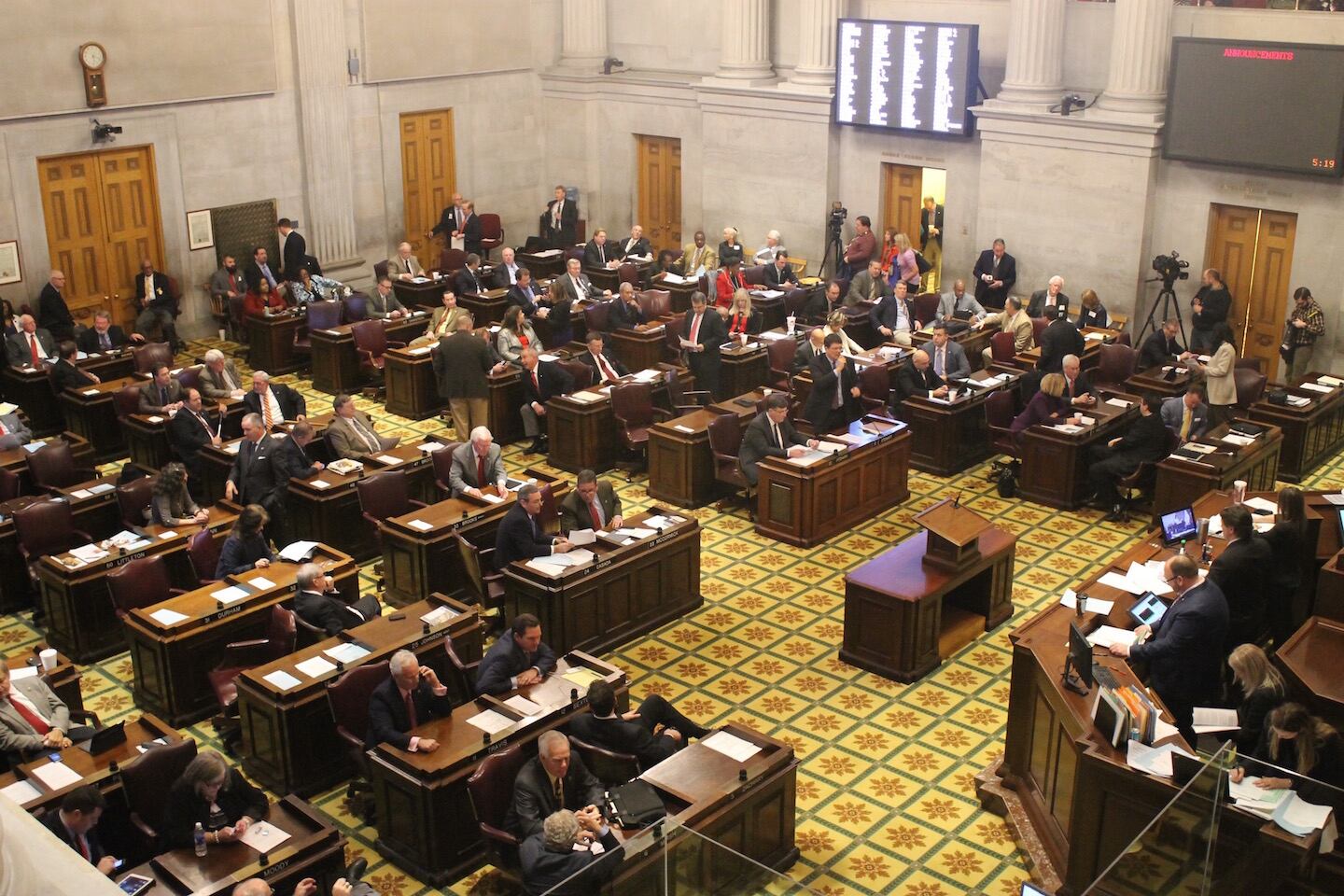
The House voted Wednesday for a state budget that removes a planned 2% increase for teacher pay but would give a $1,000 bonus to most Tennessee educators.
The pay hike rollback was expected, and the Senate approved it last week as the state faces a $1 billion revenue shortfall next fiscal year due to the recession.
The proposed bonus was a surprise and would require Senate approval as negotiators from both chambers likely head to a conference committee. The Senate voted later Wednesday to stick with its budget without changes passed by the House.
Republican leadership introduced the $1,000 bonus idea as the GOP-controlled House turned back Democrats’ efforts to inject $150 million in emergency funding to help public schools address a host of new needs raised by the coronavirus.
Rep. Matthew Hill, who chairs the House appropriations committee, said the state is not in a financial position to fund ongoing teacher raises at a cost of $59 million annually, but it could cover a onetime bonus that would cost $70 million through the state’s “rainy day” fund.
“This amendment allows us to tell our teachers and to show our teachers in a very tangible way that we appreciate them,” said Hill, a Republican from Jonesborough. “We appreciate their hard work. And we appreciate the challenge that they’re going to have here in a few weeks as students return” to the classroom for the first time in six months.
The money would give a bonus to teachers who are evaluated as a 3, 4, or 5 on the state’s 5-level scale for effectiveness.
Hill said 90% of the state’s 66,000 public school teachers would receive the bonus, which should arrive before Jan. 1.
The proposal offers an olive branch to the state’s educators after Gov. Bill Lee proposed a 4% pay hike for teachers in February and vowed to make Tennessee the best state in America to be a teacher. But it does nothing to increase teachers’ annual average salary of $53,980, which trails teacher salaries in half of Tennessee’s eight border states and the national average of $60,477, according to the latest rankings by the National Education Association. As a result, Tennessee has struggled to stay competitive and lure more candidates into the profession, even with over $370 million in increases for teacher compensation since 2016.
The House voted 89-1 for the bonus plan — but not before Democrats criticized the GOP-drafted budget that adds hundreds of millions of dollars to the state’s rainy day fund while eliminating a pay raise for teachers and other state employees.
“I’m going to support [the proposal] because anything is better than none. But we can do better,” said Rep. Antonio Parkinson of Memphis.
Rep. Gloria Johnson of Knoxville argued the bonus should not be limited to teachers who receive top ratings under Tennessee’s evaluation system.
“You can have some of the best teachers in the world at these struggling schools, but their scores come down because they don’t have the resources they need,” she said.
The head of the state’s largest teacher organization welcomed the proposed bonus as a “compromise and good first step” during uncertain economic times.
“This money originally was to put in the state’s rainy day fund, and this recognizes that it’s certainly raining now,” said Beth Brown, president of the Tennessee Education Association.