Gov. Bill Lee announced Tuesday that all 1,838 Tennessee public schools have completed their annual security review, while more than two-thirds of the state’s 147 districts have participated in specialized safety training.
Lee promised that state troopers will make unannounced visits to K-12 campuses this school year to make sure staff are properly latching all doors and following standard precautions.
Meanwhile, more than 10,000 Tennesseans have downloaded SafeTN, a smartphone app to confidentially report school-related safety concerns.
The governor’s school security update, delivered by video, came nearly a month into the start of the new school year and three months after he signed an executive order directing school leaders and law enforcement to carry out existing school safety protocols. The efforts are a response to the May 24 shooting that killed 19 children and two teachers at a Texas elementary school.
Under Lee’s leadership, Tennessee has emphasized fortifying school campuses rather than reducing the number of firearms. Despite having one of the nation’s highest rates of gun deaths, the state loosened requirements for gun ownership under a 2021 law that allows most Tennesseans 21 and older to carry handguns without first clearing a background check, obtaining a permit, or getting trained on firearms safety.
“In Tennessee, we’ve prioritized a practical approach to school safety,” Lee said in his video message.
State law requires each school to conduct a security assessment based on criteria from the state Department of Homeland Security. Districts out of compliance cannot apply to the state for school safety grants.
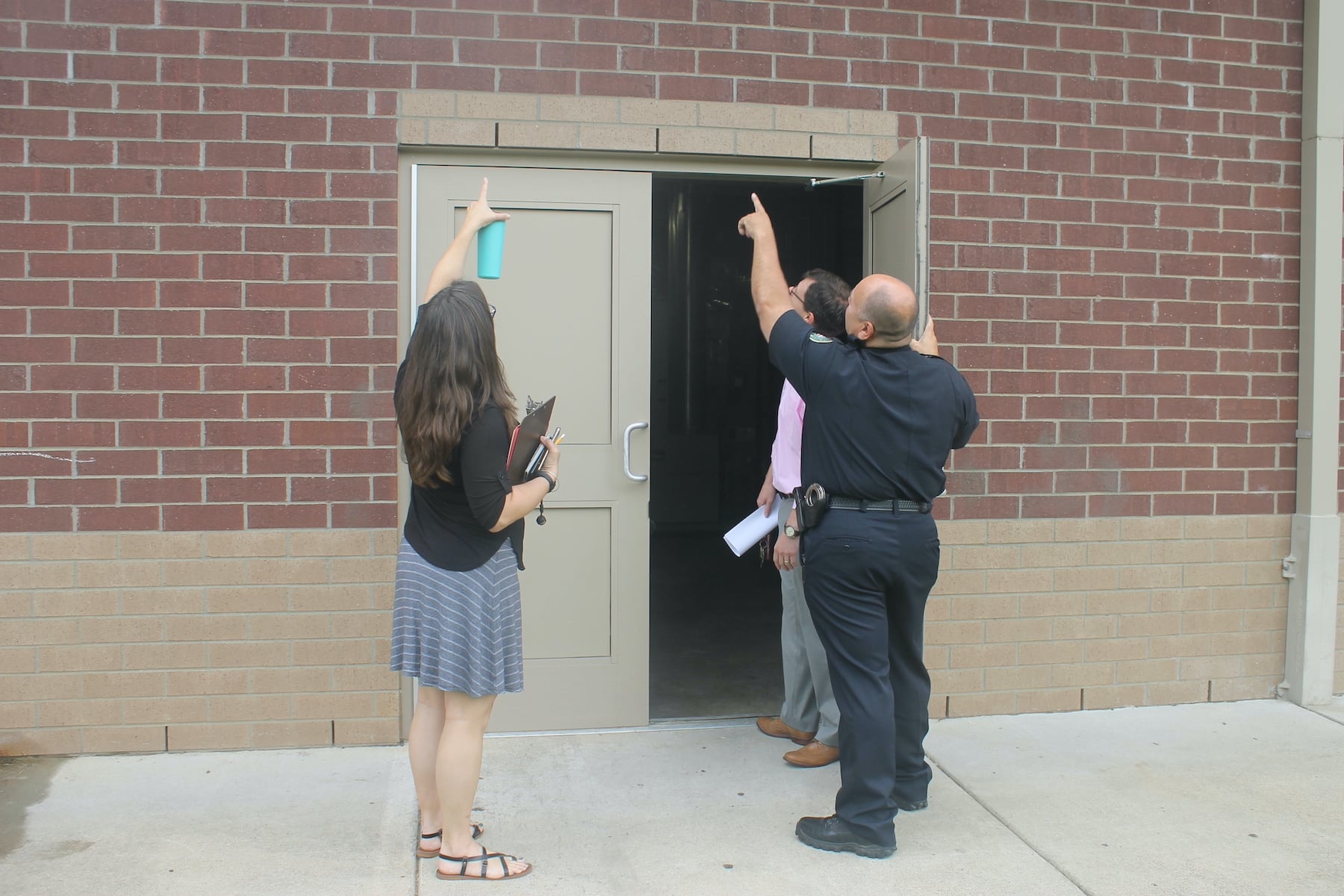
Lee reported that 98% of the state’s K-12 schools have conducted their security assessments, in which a school administrator or designee teams up with a local law enforcement officer to conduct an on-site inspection that generally takes two to four hours. But his spokesman, Casey Black Sellers, clarified later that all inspections have been completed since Lee recorded his video message.
The state did not immediately respond to Chalkbeat’s requests for the list of districts that have not yet undergone safety training.
But Lee reported that 600 school-based law enforcement officers have completed updated training, and that active-shooter training courses have been available in all three regions of the state.
School-based behavioral health liaisons are also in place in all 95 counties, he said.
Marta W. Aldrich is a senior correspondent and covers the statehouse for Chalkbeat Tennessee. Contact her at maldrich@chalkbeat.org.