

Test scores, attendance, and diploma attainment will all factor in. A new addition will give students points for their scores on the Classic Learning Test.
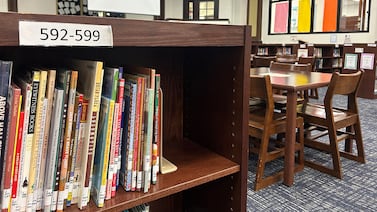
Voters approved a referendum to fund schools in 2018. But a lot has changed since then.

Bills reshuffling Indianapolis schools, requiring a bell-to-bell school cellphone ban, and implementing lessons about waiting until marriage to have children are going to the governor’s desk.

Test scores, attendance, and diploma attainment will all factor in. A new addition will give students points for their scores on the Classic Learning Test.
Voters approved a referendum to fund schools in 2018. But a lot has changed since then.
Bills reshuffling Indianapolis schools, requiring a bell-to-bell school cellphone ban, and implementing lessons about waiting until marriage to have children are going to the governor’s desk.
A lawsuit from Attorney General Todd Rokita alleges the district unlawfully impeded federal Immigration and Customs Enforcement.
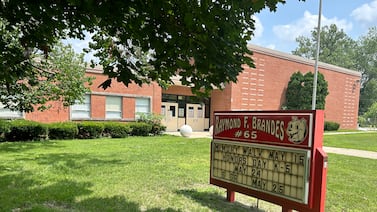
The vote could mark the district's last $1 sale of a district school building to a charter school.

The bill says students would either have to leave their devices at home or power them off and store them.

The appointed board would assume authority over Indianapolis school transportation, certain aspects of accountability, and buildings.
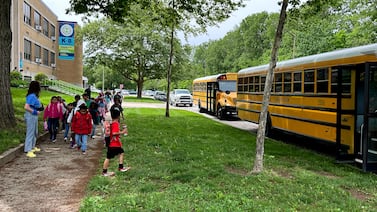
Charter leaders and advocates are concerned about relinquishing power over buildings. IPS supporters, meanwhile, worry lawmakers are treating the district unfairly.
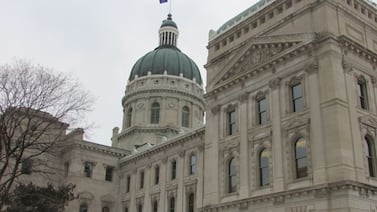
Indiana legislators are advancing a bill banning cellphones from schools as session comes to a close.

Monarca Academy, which launched in 2022 within Northwest Middle School, will add high school grades after years of attracting Latino and immigrant families on the west side of Indianapolis.
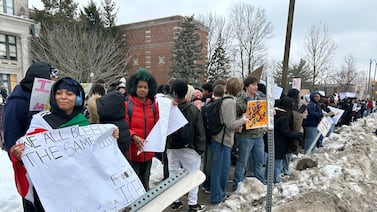
Lawmakers rejected amendments that would have exempted school districts and school resource officers, leaving uncertainty about how the measure may apply to K-12 schools.
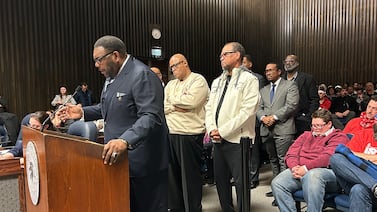
The coalition statement reflects months of tension between lawmakers, reform groups, and community members. It comes as lawmakers are debating an IPS governance overhaul that would leave the elected board with less power.
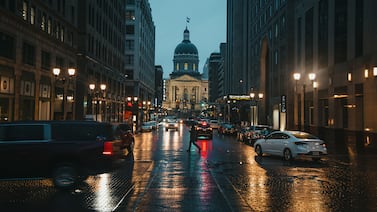
Under federal law, degrees must raise graduates’ earnings above those of a typical high school graduate.

Hundreds of students walked out of class to speak against ICE last week leaving schools to strike a balance between student expression and student safety.

At Central 9, students train for careers in veterinary science, firefighting, early education, and more as Indiana expands focus on workforce training in high school.
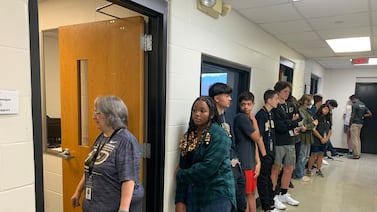
The decision to relinquish the charter for its South Bend campus will help stabilize long-term operations for its two Indianapolis campuses, the charter network said.
Become a Chalkbeat sponsor


The parents of slain Fishers teenager Hailey Buzbee spoke in support of a social media restriction for children and teens.
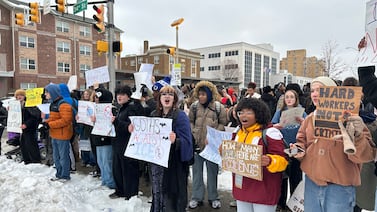
Over 100 Indianapolis students protested Immigration and Customs Enforcement in one of the latest student-driven “ICE out” demonstrations.
Key themes this year have included students’ technology use.
The bill gives a mayor-appointed board oversight of key aspects of Indianapolis district and charter schools.

Charters within Indianapolis Public Schools borders could choose not to give control of their school buildings over to the proposed Indianapolis Public Education Corporation under a bill lawmakers advanced Thursday. The updated language also clarifies who can close schools.
The Indiana School Boards Association said school districts already have the right to display the Ten Commandments alongside other documents.

Tracey Couillard, lead chef at Circle City Prep, said building healthy habits through food is an investment in students’ futures.
The legislation would require the state’s public colleges and universities to consider scores from the CLT as an alternative to SAT or ACT results.
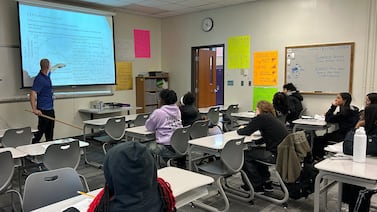
The graduation rates for the district’s Black and Hispanic students have also risen above statewide figures.

The proposed Indianapolis Public Education Corporation would have until 2028 to figure out how to manage school transportation and buildings, but its precise power over school closures is still unclear.
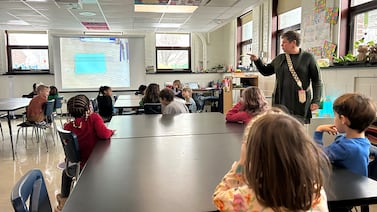
The declines could set up financial challenges for both sectors as Indianapolis schools face a potential revamp.

If Impink is elected, the remaining IPS school board members would need to appoint someone to fill the role of District 4 commissioner.
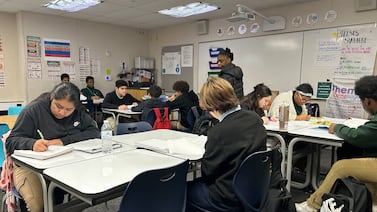
The charter school has more than tripled its enrollment since launching in IPS School 44 in 2016.
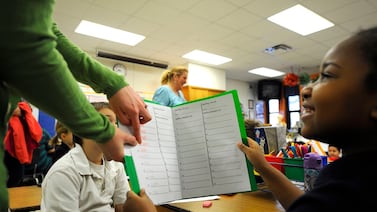
The high-impact tutoring program gives tutors evidence-based skills and helps them build relationships with students. Nearly $10 million in grant funding will create more regional hubs for the model.

The district has rescinded a resolution about undocumented students that it adopted 2017, as well as another one in 2025.
Speakers overwhelmingly rejected a recommendation that would dilute the power of the elected Indianapolis Public Schools board in favor of a 9-member board appointed by the mayor.

The proposal addresses how facilities and transportation will be run and how property taxes will be distributed.
Separate proposals would also restrict phones in schools and allow parents to set stronger filters on school-issued devices.
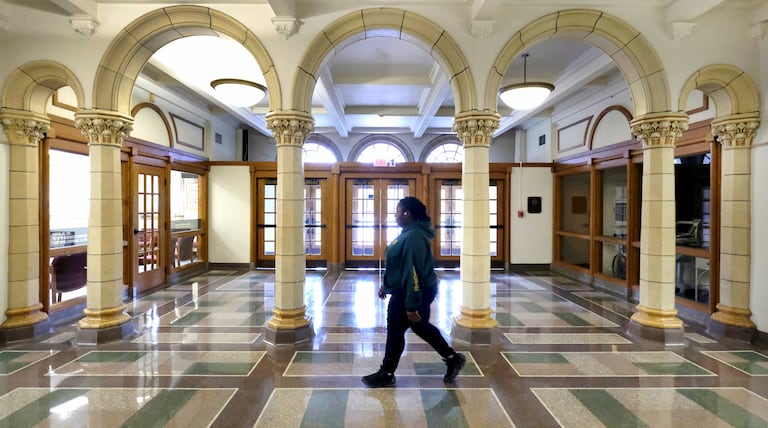
State lawmakers will consider creating a new agency to oversee IPS schools and charters. Here’s a look at the history and powerful advocates behind that push for unified control over city schools.
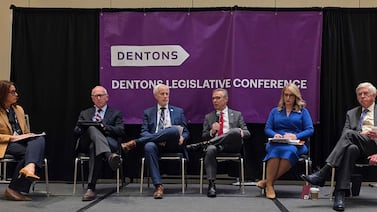
The ILEA’s recommendations are heading to lawmakers, who see the potential to replicate many of them throughout the state but could be skeptical of giving mayors more power.