How did the pandemic affect your NYC school’s state test scores? Find out here.

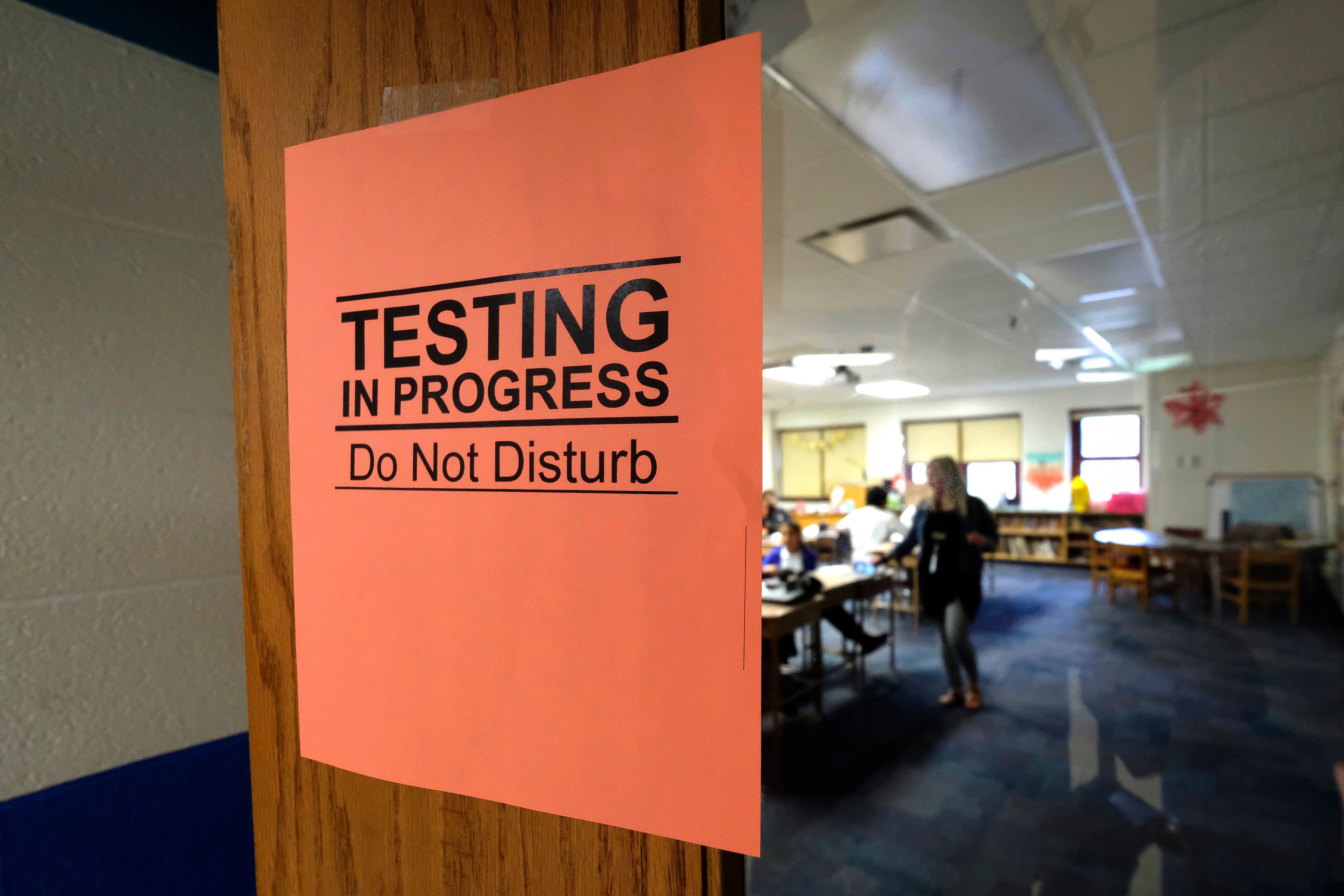
An orange sign says “testing in progress, do not disturb” as students work in the background.
How did your school fare this year? Use our searchable database below to see your school’s math and reading scores. (Alan Petersime/Chalkbeat)

New York City officials released state test scores on Wednesday, offering the first glimpse of how the pandemic affected student learning. 

Compared with 2019, the last time tests were administered normally, reading proficiency among students in grades 3-8 ticked up 1.6 percentage points to 49%. But math scores plunged 7.6 percentage points, with just shy of 38% of students passing the exam. (Here’s Chalkbeat’s detailed story on those scores.)

But those overall numbers mask important variations from school to school, which often vary in predictable ways. A relatively large swath of city schools admit students based on their prior academic performance, often leading to high test scores, while schools that serve larger shares of low-income students are more likely to post lower scores.

How did your school fare this year? Use our searchable database below to see your school’s math and reading scores.

Alex Zimmerman is a reporter for Chalkbeat New York, covering NYC public schools. Contact Alex at azimmerman@chalkbeat.org.

The Latest

The announcement at a Tuesday meeting comes as substantial changes for IPS are on the horizon that will dilute the elected school board’s power.

Supporters framed the bill as a money-saver for families. “I’m raising two daughters right now, and I think every $5 you can keep in your pocket is important,” one state lawmaker said.

College advisers said students with undocumented family members are fearful of filling out the Federal Application for Federal Student Aid. The state also has lost a FAFSA data tool that made tracking student progress on the form easier.

Democrats hold the majority on the board, and they argued that the board should stay focused on key education issues such as literacy.

Sherrill’s first budget proposes more than $13.8 billion to education with record funding for K-12 and preschool aid, expanded high-impact tutoring, and new mental health services timed to the state’s first year of phone-free schools.

Despite campaigning to end mayoral control, Mayor Zohran Mamdani is fighting to keep it — but his former Albany colleagues aren’t making it easy.