A House subcommittee has narrowly killed a bill that could have revived Tennessee’s controversial school voucher program regardless of how the state’s highest court rules this year on the state’s overturned school voucher law.
The bill aimed to change eligibility requirements for students receiving public money to pay for private school tuition under the 2019 education savings account law that squeaked through the legislature but was halted by a judge before the program could launch.
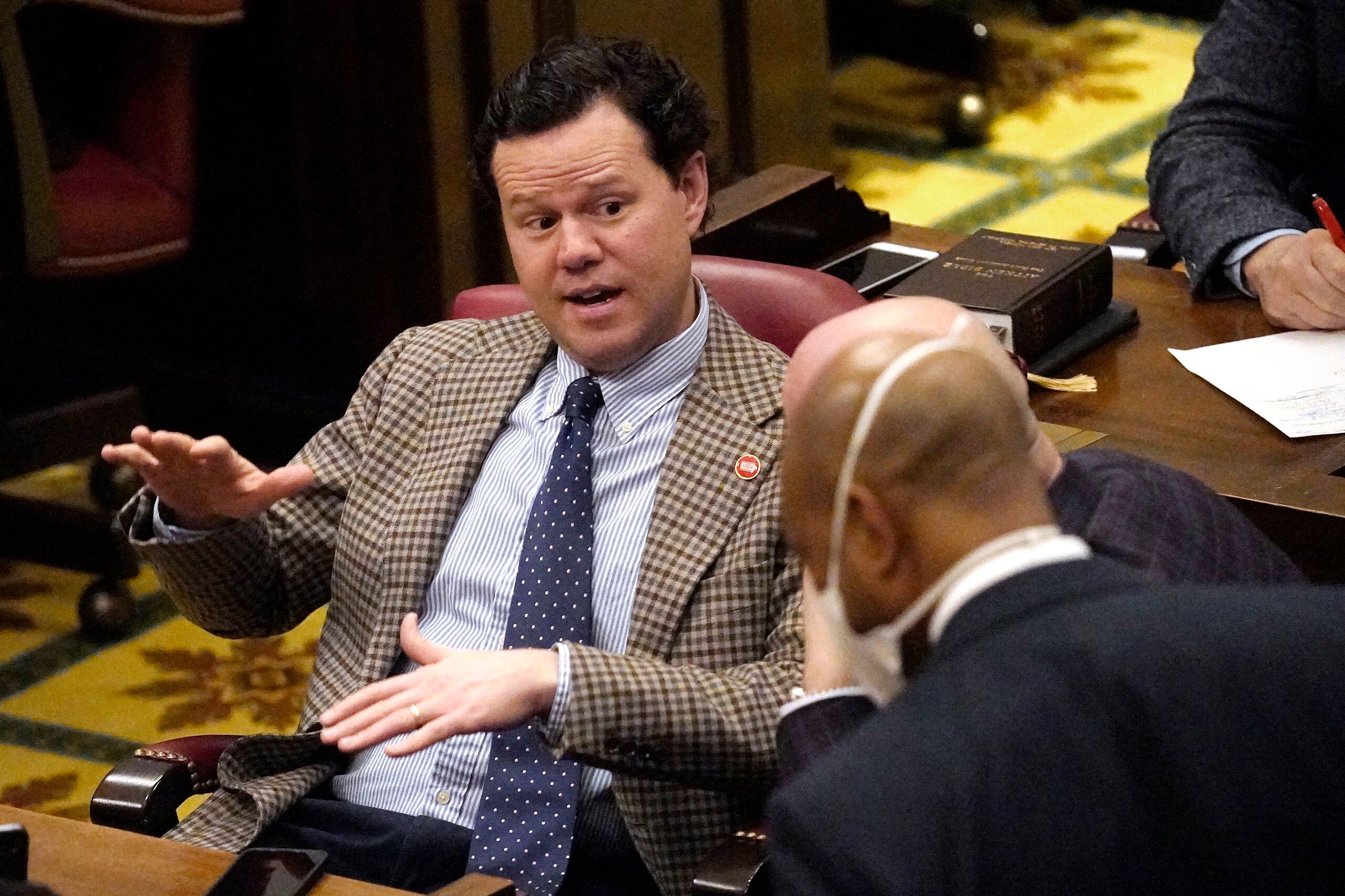
The new legislation failed 5-4 Tuesday, despite a rare subcommittee appearance by Republican House Speaker Cameron Sexton, who tried to tip the scales when a key voucher supporter, Rep. Glen Casada of Franklin, was absent. Three other Republicans — Reps. Kirk Haston of Lobelville, Chris Hurt of Halls, and John Ragan of Oak Ridge — broke ranks and voted with two Democrats against the GOP bill.
The proposal, by Rep. Michael Curcio of Dickson and Sen. Mike Bell of Riceville, would have opened eligibility to students who are either zoned to the state’s school turnaround district or whose school systems don’t offer in-person learning for a full 180 days for each of the next three school years because of the COVID pandemic.
The voucher law was overturned because it applied only to students in Memphis and Nashville schools without giving their local governments or voters a say, which two lower courts said violates the state constitution’s so-called “home rule” provision.
If the bill became law, it could have addressed constitutional questions about statewide application through the COVID provision while still likely affecting students in only Memphis and Nashville, since those are Tennessee’s only cities with low-performing schools taken over by the state-run Achievement School District.
Rep. John Clemmons, a Nashville who voted against the bill, noted that the state’s appeal of the voucher law is pending before the Tennessee Supreme Court, which recently heard oral arguments centering on questions about whether home rule applies in this case.
“It seems like we’re trying to clean that up and try to avoid some kind of adverse judicial determination for an inherently unconstitutional piece of legislation,” Clemmons said. “So I guess the true intent of this legislation is problematic.”
Curcio dodged questions about the bill’s intent.
“If this were to address that, I think that would be kind of a periphery issue,” Curcio responded. “We’re just trying to change the criteria of who’s eligible.”
A similar bill by Curcio and Bell cleared the Senate Education Committee in January. However, the sponsors started over with new legislation when other constitutional questions emerged about their first proposal. Curcio did not respond Wednesday when asked if he planned to pursue a House committee vote on his earlier bill.
Tuesday’s vote came as Gov. Bill Lee, who pushed for the voucher law, is seeking to shift Tennessee to a student-based school funding formula. The model would calculate education funding on a student-by-student basis, making it easier for Tennessee to start a private school voucher program. However, Lee has said vouchers have nothing to do with the need for a new funding formula that is simpler to understand and based on the needs of students over systems.
Rep. Harold Love, another Nashville Democrat who voted against Curcio’s bill, said changing voucher eligibility when the state is considering funding reform is problematic.
“I would hope that maybe we would hold off until we get this new funding formula under our belts and understand it,” he said.
Marta W. Aldrich is a senior correspondent who covers the statehouse for Chalkbeat Tennessee. Contact her at maldrich@chalkbeat.org.